Publication, Part of NCARDRS Congenital Anomaly Statistics: Annual Data
NCARDRS Congenital Condition Official Statistics Report, 2022
Official statistics
Minor change in title
The name of this collection of official statistics has been changed to NCARDRS Congenital Condition Statistics Report
17 October 2025 16:08 PM
Pregnancy outcome
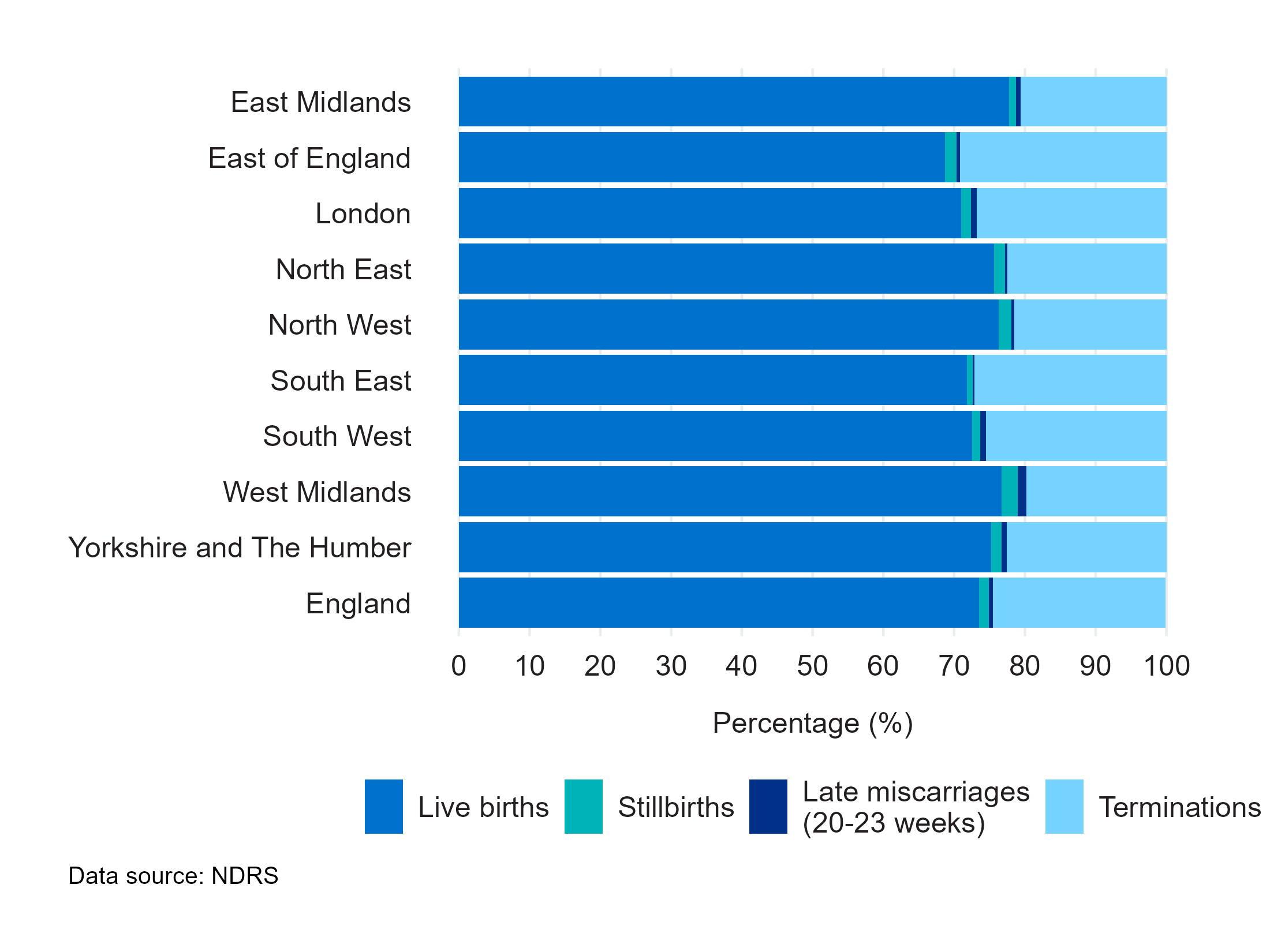
As shown in Table A below, of the 14,772 babies with one or more congenital conditions, the majority (10,856, 73.5%) resulted in a live birth. Of the remaining 3,916 babies, 214 (1.4%) were stillbirths (24 and over completed weeks of gestation), 95 (0.6%) were late miscarriages (20 to 23 completed weeks of gestation) and 3,607 (24.4%) were terminations of pregnancy at any gestation.
In this report, terminations of pregnancy represent terminations at any gestation for any reason, where a congenital condition was present. This group will include terminations for fetal anomaly (TOPFA) i.e. those carried out under Category E of the Abortion Act 1967, but it will also include terminations for other grounds. NCARDRS is not notified as to the reason for any termination, just that it has taken place.
|
Pregnancy outcome |
Number of babies |
Percentage (%) |
|
Live birth |
10,856 |
73.5 |
|
Stillbirth |
214 |
1.4 |
|
Late miscarriage (20-23 weeks) |
95 |
0.6 |
|
Termination |
3,607 |
24.4 |
|
Total |
14,772 |
100.0 |
The proportion of pregnancies with any congenital condition resulting in a live birth ranged from 68.7% in the East of England to 77.8% in the East Midlands (Figure 3a; Data table 3a). There are likely to be several reasons behind this, including differences in the demographic composition of the population, such as differences in the age at delivery, choices around screening and pregnancy. There may also be some regional variation in ascertainment and data completeness, which could underestimate the number of miscarriages and terminations.
Pregnancy outcome for babies with Down’s syndrome, Edwards’ syndrome and Patau’s syndrome
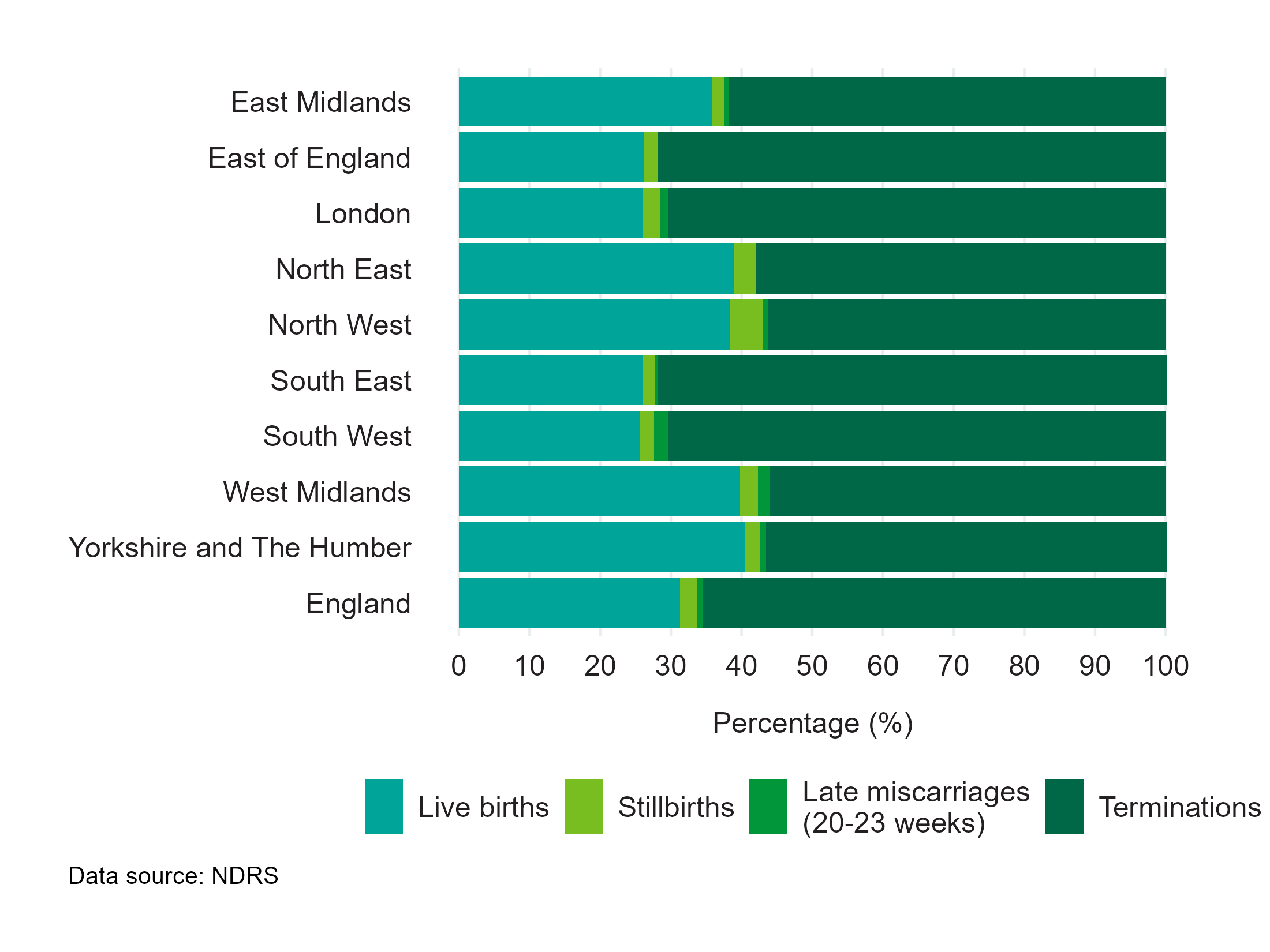
For likely the same reasons, there were some clear regional differences in the proportion of different birth outcomes across regions for pregnancies with Down’s syndrome, Edwards’ syndrome and Patau’s syndrome. The proportion of pregnancies with these conditions that resulted in a live birth ranged from 25.6% in the South West to 40.4% in Yorkshire and the Humber (Figure 3b; Data table 3b).
Last edited: 3 November 2025 11:38 am