Publication, Part of NCARDRS Congenital Anomaly Statistics: Annual Data
NCARDRS Congenital Condition Official Statistics Report, 2022
Official statistics
Minor change in title
The name of this collection of official statistics has been changed to NCARDRS Congenital Condition Statistics Report
17 October 2025 16:08 PM
Important public health indicators: perinatal and infant mortality
Perinatal and infant mortality in England
Perinatal mortality refers to stillbirths and deaths under 7 days of age (relative to all live births and stillbirths, or total births) and infant mortality is defined as deaths under one year of age (relative to all live births).
Data table 8a shows that there were 486 babies with one or more congenital conditions that were stillborn or died within 7 days of birth, giving a rate of perinatal mortality in babies with any reported condition of 8.4 (95% CI 7.7-9.2) per 10,000 total births in England in 2022.
There were 627 infant deaths among babies with one or more congenital conditions out of the 577,046 live births in 2022, giving an infant mortality rate of 10.9 (95% CI 10.0–11.8) per 10,000 live births.
Child and infant mortality data from the ONS for 2022 in England and Wales showed that congenital conditions were the most common cause of death in the post-neonatal period, accounting for 34.0% of deaths, rising from 32.1% in 2021. Congenital conditions were also listed as the cause of 33.0% of infant deaths and 27.3% of perinatal deaths. While the data within this report should be viewed in a wider context of perinatal and infant mortality, congenital conditions, in particular congenital heart disease (CHD), conditions with a known genomic association and digestive system conditions, are a common factor in infant and perinatal deaths.
The data presented here should be viewed with some caution. Babies with more than one condition will appear in each subgroup. A link between the presence of a congenital condition and the cause of death has not been established. It is possible that the identified congenital condition had no bearing on mortality. There are some conditions (such as anencephaly) where the pregnancy is not likely to proceed to a live birth or still birth, and instead will result in early fetal loss or termination. These conditions, associated with a high level of antenatal mortality, will therefore not be represented in the perinatal or infant mortality estimates.
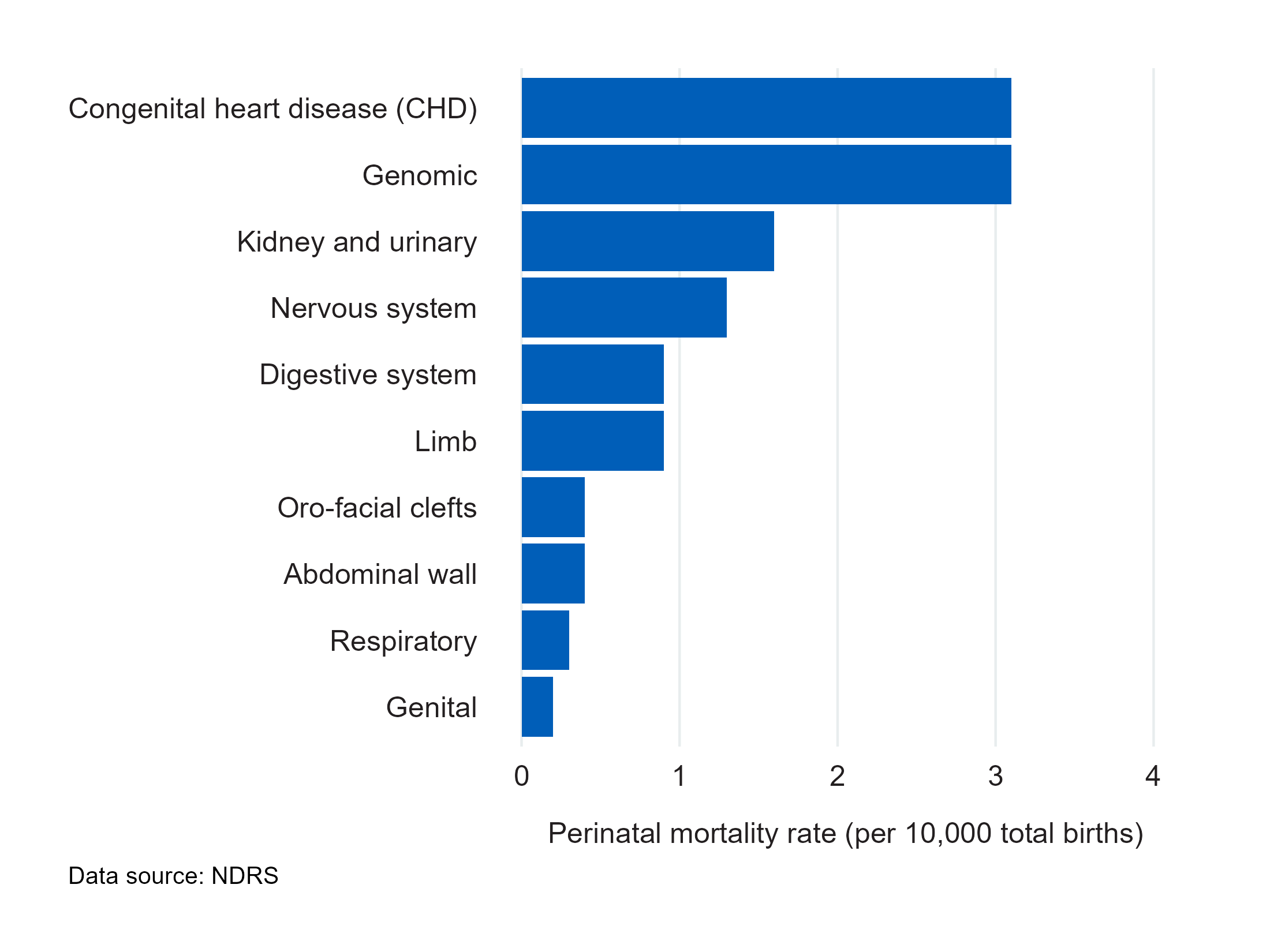
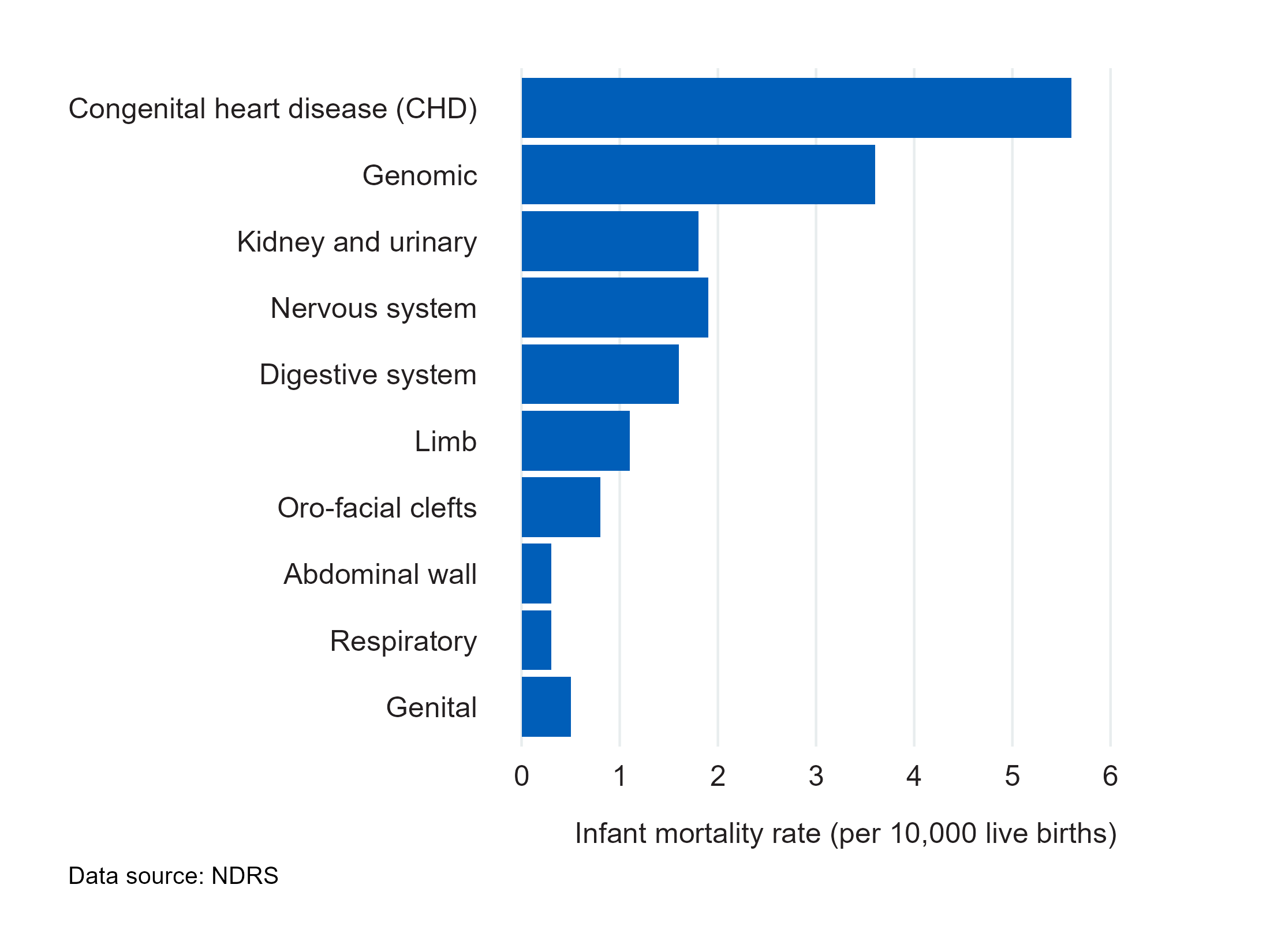
Figures 8a and 8b show that the most prevalent condition subgroups were similar across perinatal and infant mortality, although ordered differently. The rate (per 10,000 total births) of perinatal mortality (Figure 8a and Data table 8a) associated with congenital conditions was highest in both CHD (3.1, 95% CI 2.7-3.6) and conditions with a known genomic association (3.1, 95% CI 2.7-3.6). When looking at the rate (per 10,000 live births) of infant mortality (Figure 8b and Data table 8a), CHD was highest (5.6, 95% CI 5.0-6.2), followed by conditions with a known genomic association (3.6, 95% CI 3.1-4.1).
Perinatal and infant mortality, by region
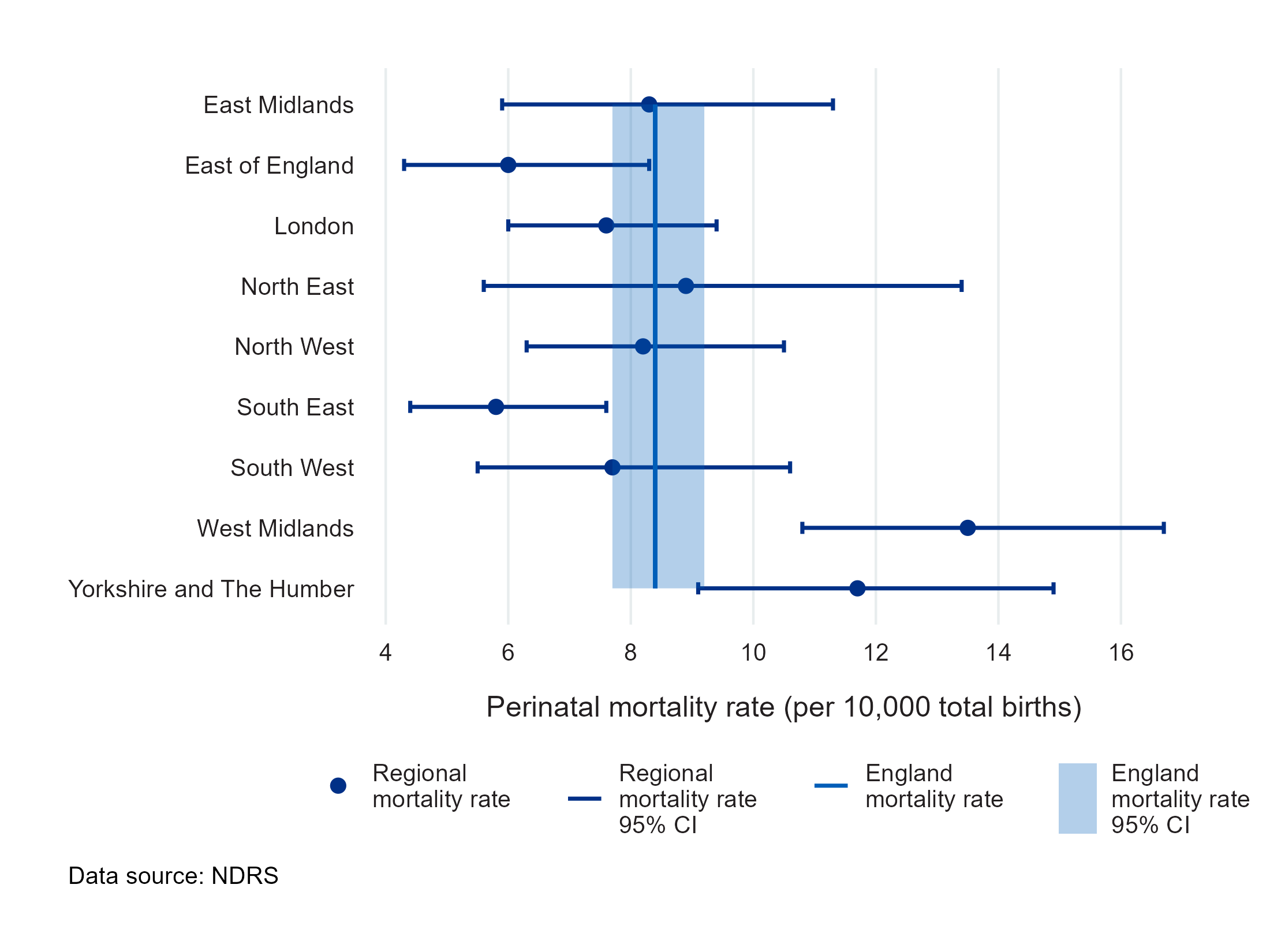
Figures 8c and 8d show the regional variation of perinatal and infant mortality associated with congenital conditions respectively. The rate (per 10,000 total births) of perinatal mortality across all congenital conditions by region (Figure 8c and Data table 8b) was highest in the West Midlands (13.5, 95% CI 10.8-16.7), which was over twice the rate of the lowest region, the South East (5.8, 95% CI 4.4-7.6). These were the only two regions with rates that were significantly different to the average for England (8.4, 95% CI 7.7-9.2).
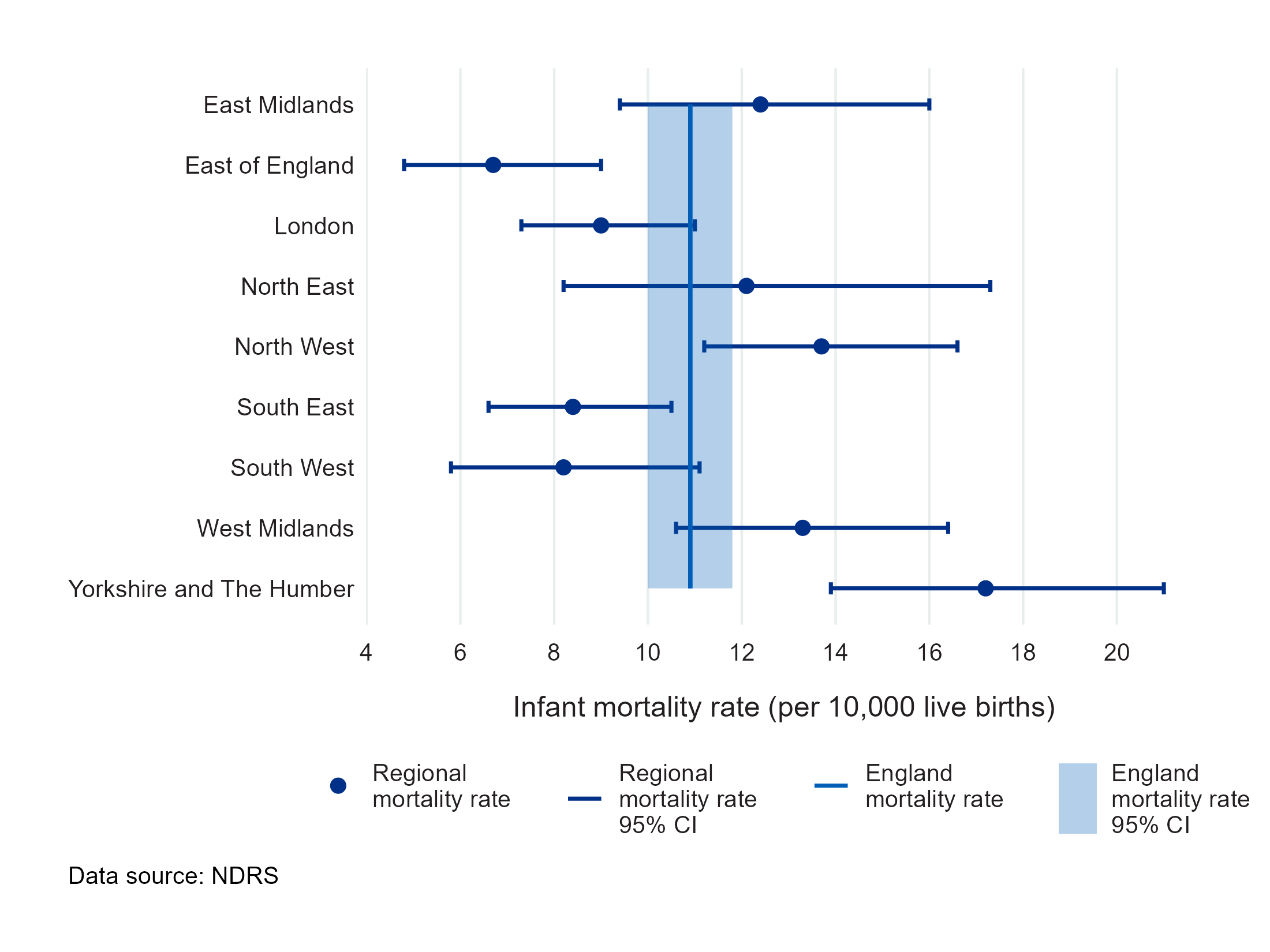
Looking at the rate (per 10,000 live births) of infant mortality across all congenital conditions by region (Figure 8d and Data table 8b), the highest prevalence was found in Yorkshire and The Humber (17.2, 95% CI 13.9-21.0), just under three times the rate in the lowest region, East of England (5.8, 95% CI 4.4-7.6). These were the only two regions with rates that were significantly different to the average for England (10.9, 95% CI 10.0-11.8).
There are many reasons why regional variation may exist in infant and perinatal mortality including differences in termination rates across regions (Figure 3a) where more babies with severe conditions may proceed to a live birth or stillbirth in regions with lower rates of terminations, as well as regional differences in the wider determinants of health including deprivation, ethnicity, other demographics and care provision, extending to pre-pregnancy, nutritional, antenatal care as well as pregnancy care. The regional pattern observed for infant and perinatal mortality in relation to congenital conditions was consistent with observed overall infant and perinatal mortality rates.
Last edited: 3 November 2025 11:38 am