Publication, Part of NCARDRS Congenital Anomaly Statistics: Annual Data
NCARDRS Congenital Anomaly Official Statistics Report, 2021
Official statistics
3.3 Timing of the first detection of each congenital anomaly group
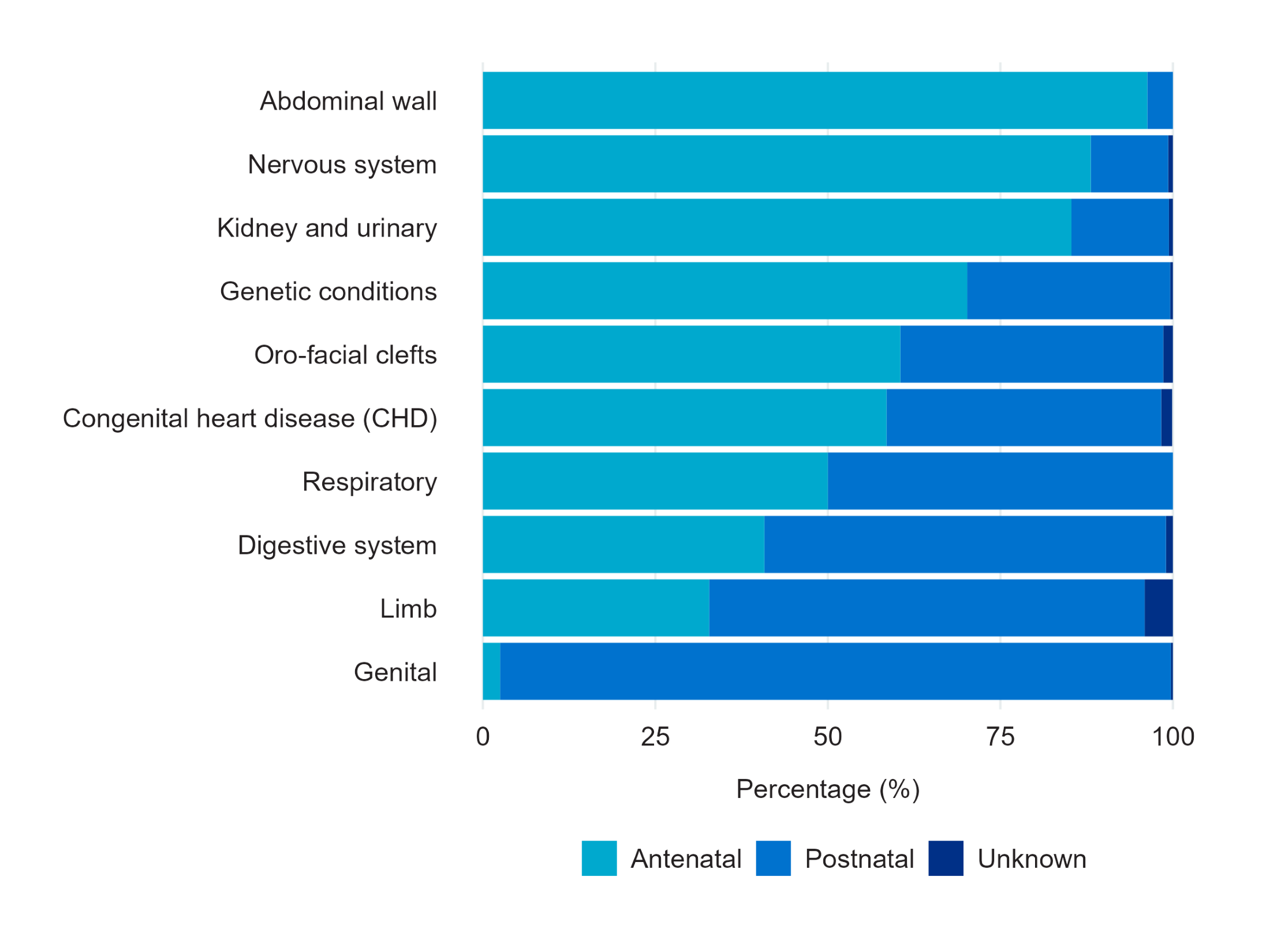
Some types of congenital anomaly are more likely to be detected antenatally than others. Figure 6 shows that anomalies such as abdominal wall (96.3%), nervous system (88.1%) and kidney and urinary anomalies (85.3%) are the 3 conditions most frequently identified antenatally. Genital anomalies are unlikely to be identified antenatally.
Individual anomalies within these subgroups may not follow these patterns. Babies with more than one anomaly will be represented in each applicable bar. A more detailed breakdown by specific congenital anomaly, including the number of babies reported, is available in Data table 6.
Figure 6: Timing of detection by congenital anomaly subgroup – based on individual anomaly (percentage) in England and the Crown Dependencies, 2021
Last edited: 27 March 2024 2:26 pm