Publication, Part of NCARDRS Congenital Anomaly Statistics: Annual Data
NCARDRS Congenital Anomaly Official Statistics Report, 2020
Official statistics
3.2 Timing of the first detection of a baby with a congenital anomaly
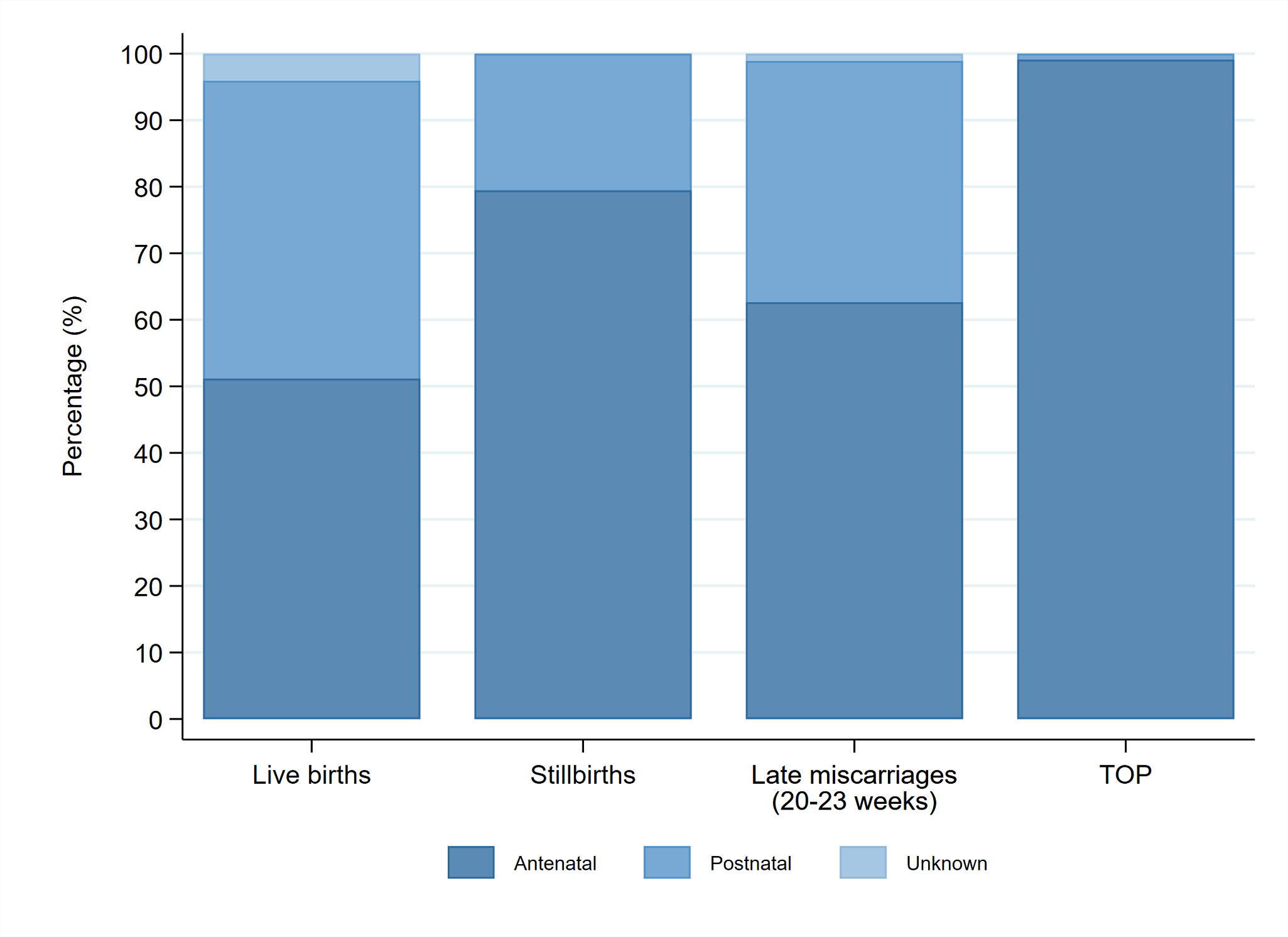
The timing of first detection of a baby with a congenital anomaly was known for 12,665 (96.9%) babies in 2020 (Figure 5; Data table 4). Where the timing of detection was known, 8,191 (64.7%) babies with a congenital anomaly were identified antenatally. Of these, 4,995 (61.0%) were born alive, 174 (2.1%) were stillborn, 57 (0.7%) were a late miscarriage and 2,965 (36.2%) resulted in a termination (Data table 4). Where a congenital anomaly was first detected in a baby postnatally, 4,369 (97.7%) were detected following a live birth.
Figure 5 (Data table 4) shows that in just over half (N=4,995, 53.3%) of babies with a congenital anomaly that were born alive and where the timing of detection was known, an anomaly was detected antenatally. This may be an over-estimate as anomalies diagnosed postnatally are more difficult to ascertain and may be identified later. Where a baby was stillborn with a congenital anomaly, an anomaly had been detected antenatally in 174 (79.5%) cases.
In Figure 5, if more than one congenital anomaly was identified in a baby, the timing of detection refers to the first anomaly detected.
Figure 5: Timing of detection of a baby with any anomaly and pregnancy outcome (percentage) in England, 2020,
Last edited: 1 December 2022 10:17 am