Publication, Part of NCARDRS Congenital Anomaly Statistics: Annual Data
NCARDRS Congenital Anomaly Official Statistics Report, 2020
Official statistics
3.4 Timing of confirmation of Down’s syndrome, Edwards’ syndrome and Patau’s syndrome
Figure 7 and Data tables 6, 7 and 8 show the number of babies categorised by timing of confirmation for Down’s syndrome, Edwards’ syndrome and Patau’s syndrome. As distinct from detection, confirmation is based on a definitive diagnosis from genetic test and as such represents a confirmed diagnosis, for further information see the Technical details. Where timing of confirmation was known, 63.3% (N=929) of babies with Down’s syndrome, 77.2% (N=331) of Edwards’ syndrome and 65.4% (N=100) of Patau’s syndrome were confirmed antenatally
Postnatal diagnoses include babies where a woman has chosen to decline antenatal screening or diagnostic cytogenetic tests but will also include testing performed following a late miscarriage, termination or stillbirth as well as live birth.
Figure 7: Timing of confirmation of babies with Down’s syndrome, Edwards’ syndrome and Patau’s syndrome born in England in 2020
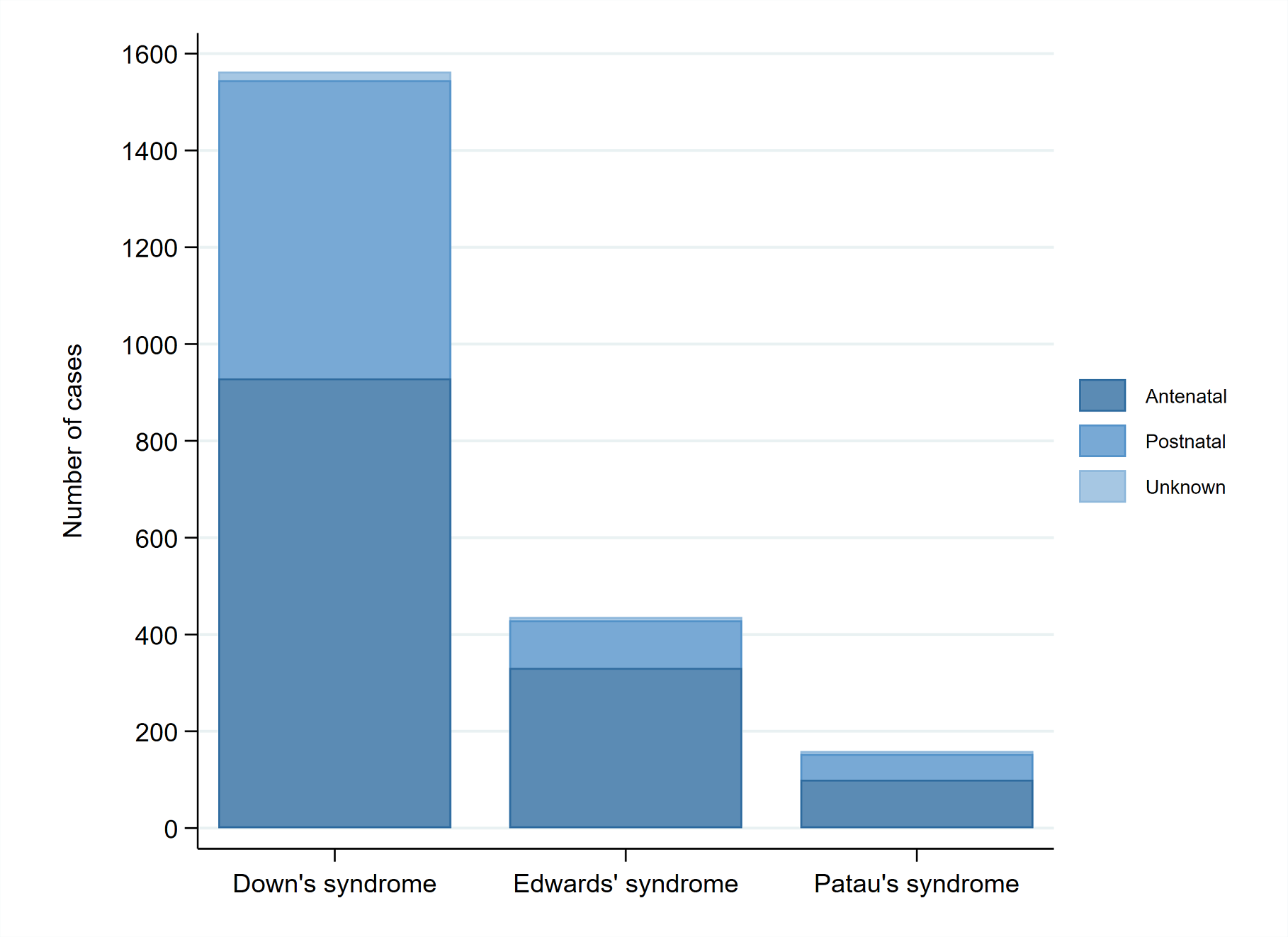
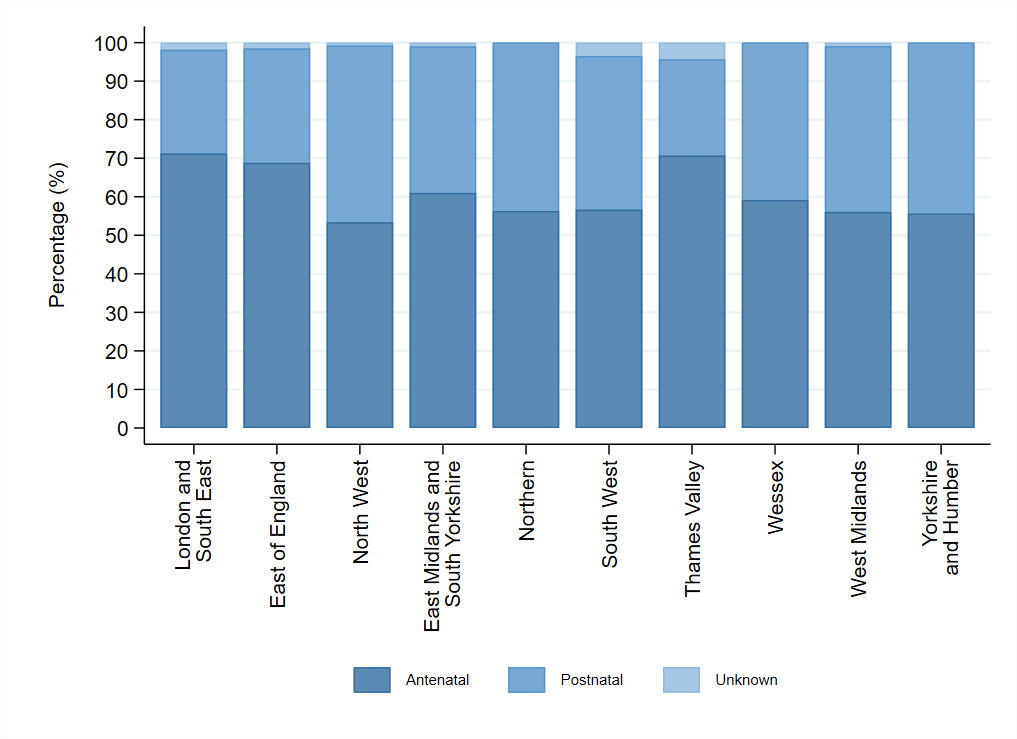
Figure 8 (Data table 9) shows timing of confirmation split by geographical region. There is variation in the timing of confirmation across the regions. There are likely to be several reasons behind this, including some regional variation in ascertainment and data completeness, differences in the population, differences in maternal age and uptake of screening. Where a baby has had both a prenatal and a postnatal diagnostic test, the earlier diagnosis is taken as the point of ascertainment.
Figure 8: Timing of confirmation for babies with Down’s syndrome, Edwards’ syndrome and Patau’s syndrome delivered in 2020, by NCARDRS region
Last edited: 1 December 2022 10:17 am