Publication, Part of Health and Care of People with Learning Disabilities
Health and Care of People with Learning Disabilities, Experimental Statistics 2021 to 2022
Experimental statistics, Other reports and statistics, Official statistics in development
Data Quality Notice
NHS England had identified an issue with the data for the following indicator which was reported in the Interactive Visualisation Tool and the data csv file for this publication:
LDOB080 - Number of patients recorded on their general practice’s Learning Disabilities Register aged 14 years or over who have received an annual learning disability health check and have been provided with a health action plan, as at the end of the reporting period.
The proportion of people on the learning disability register with a heath check and health action plan was lower than expected. We have investigated the issue and found an error in the data extraction. We have therefore removed LDOB080 from the published Power BI and csv files for years 2019-20 through to 2024-25. An alternative source of this data is available for this indicator and we recommend that you refer to the Learning Disability Health Check Scheme publication for March 2022: Learning Disabilities Health Check Scheme - NHS England Digital
13 May 2026 16:41 PM
Coverage and Prevalence
Data on people with and without learning disabilities was collected from an average of 57% of GP practices in England for the years 2017-18 to 2021-22, to identify potential differences in treatment, health status and outcomes of people with learning disabilities compared to the rest of the population.
Patient Coverage
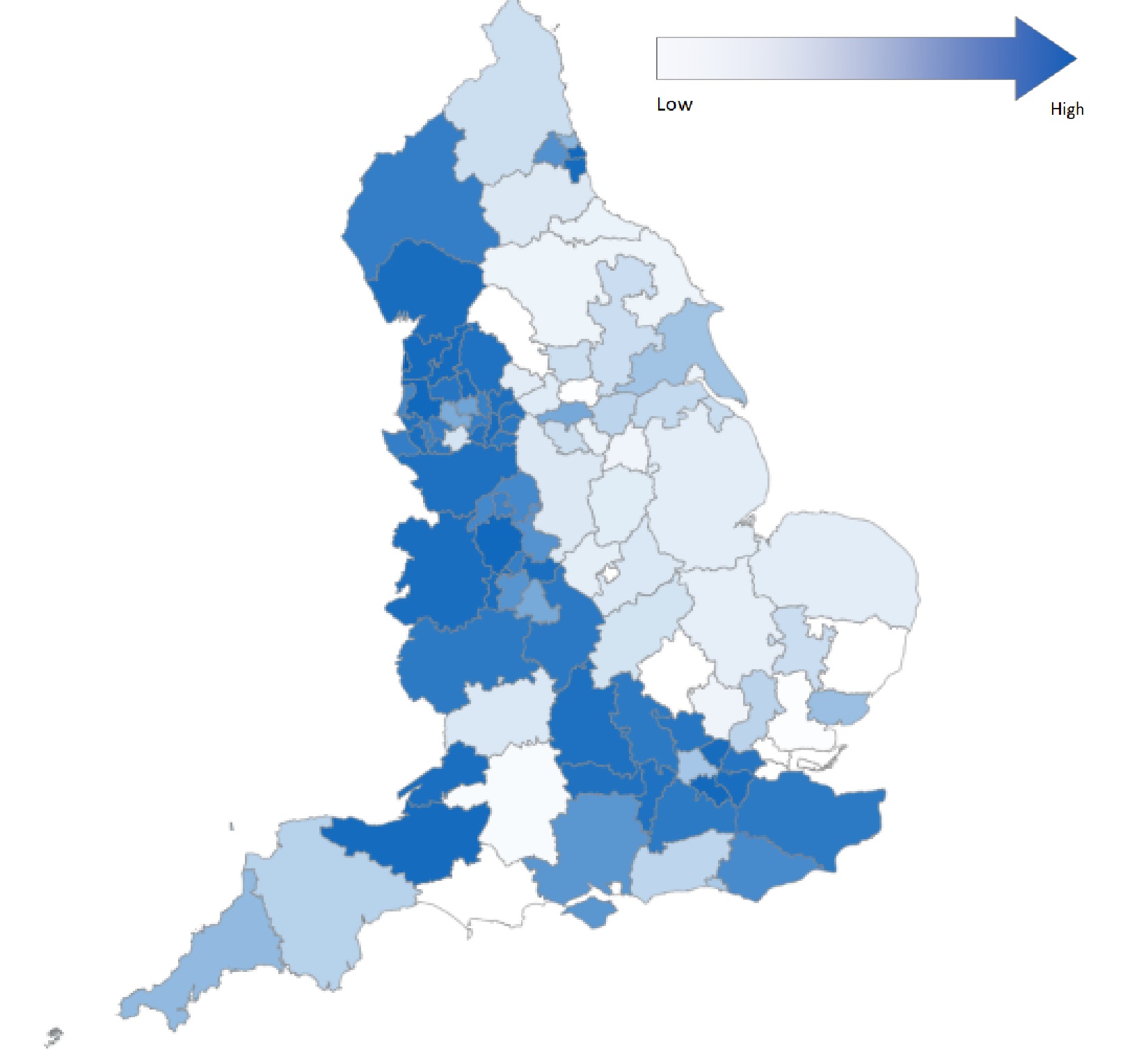
55.7% of patients registered in England in 2021-22 were included in this publication compared to 59.2% in 2017-18.
Fig 1: Percentage of patients included in this publication by Sub Integrated Care Board Location, 2021-22
Prevalence of learning disabilities
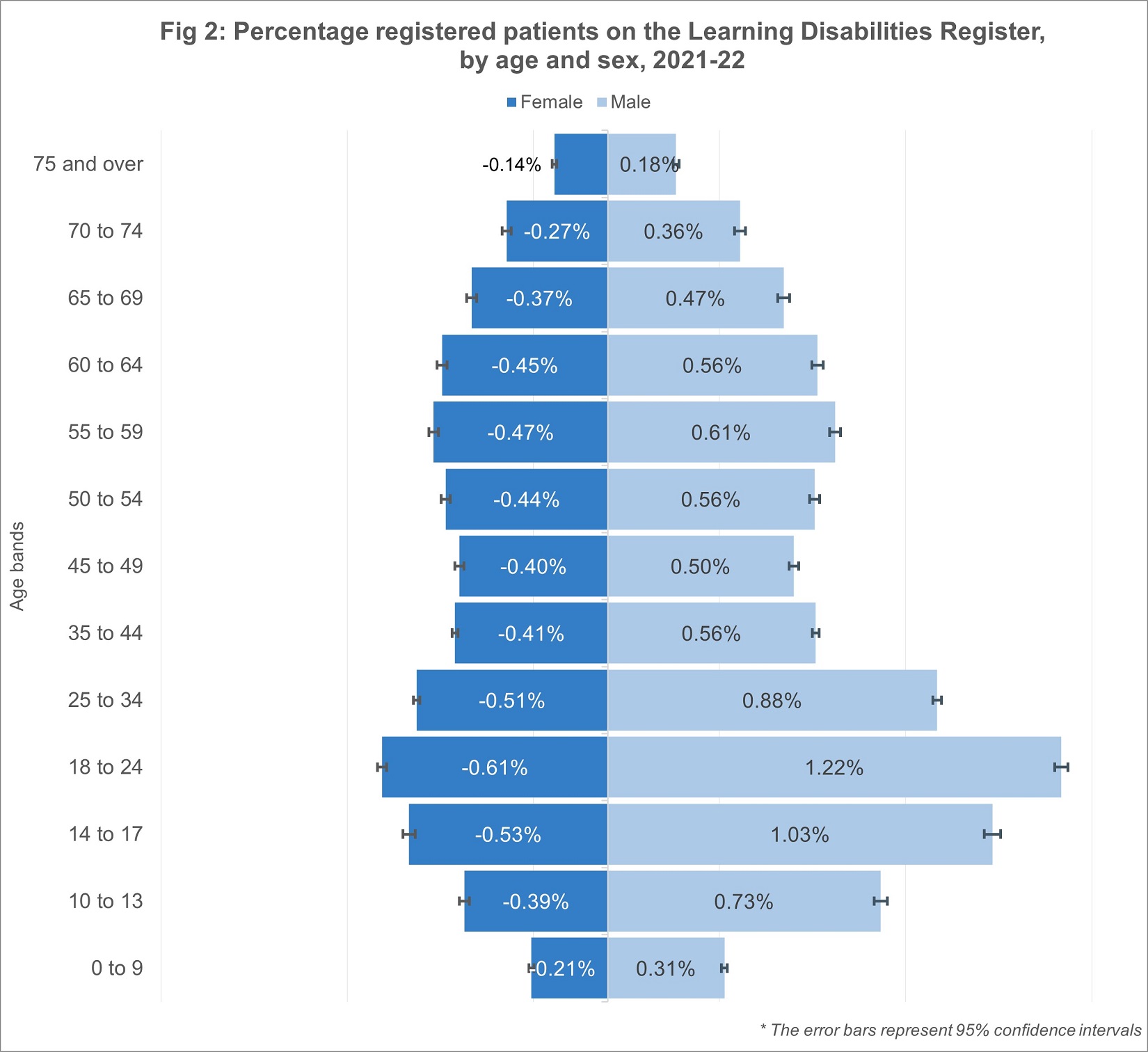
Overall, 0.5% (177,341) of the patients included in this publication were listed on their GP practices Learning Disabilities Register in 2021-22.
Prevalence of autism
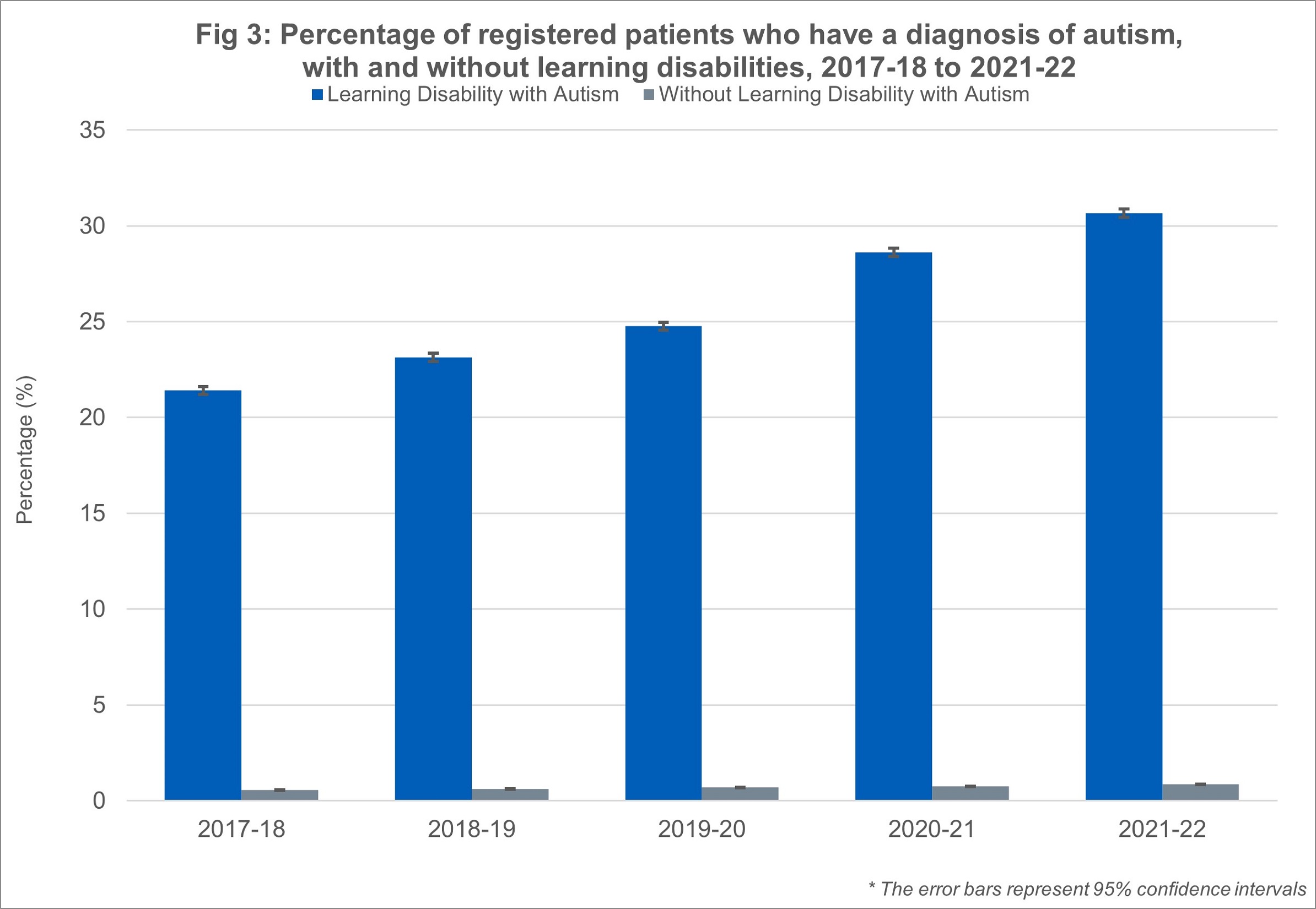
The percentage of patients with a learning disability who have also been diagnosed with autism increased steadily from 21.4% in 2017-18 to 30.7% in 2021-22, a rise of 9.3 percentage points. Diagnoses of autism in patients without a learning disability rose by 0.3 percentage points (0.5% in 2017-18 to 0.9% in 2021-22) over the same period.
In 2017-18 patients with a learning disability were 25 times more likely to be diagnosed with autism than those without a learning disability. This fell to 21 times more likely in 2021-22.
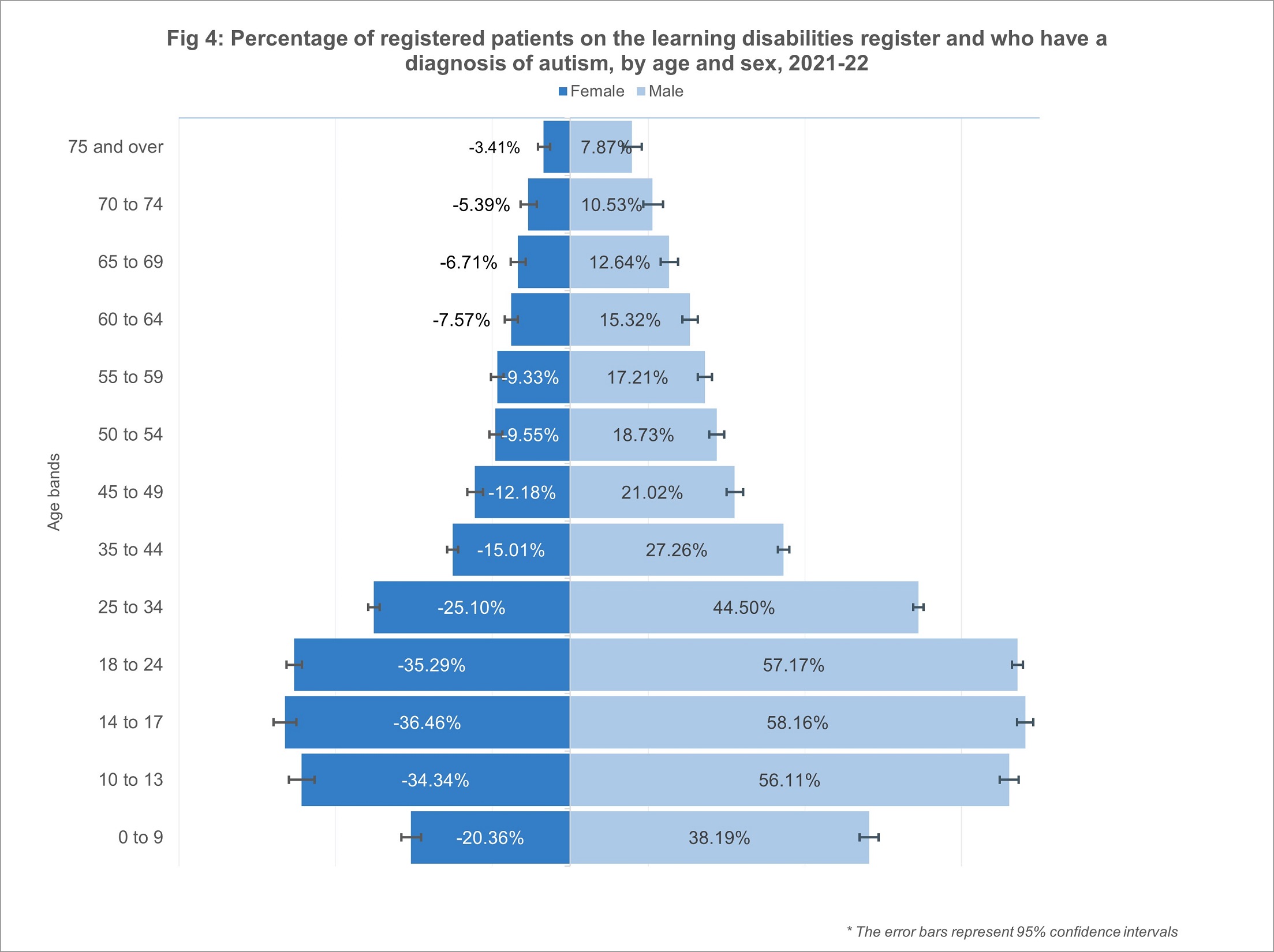
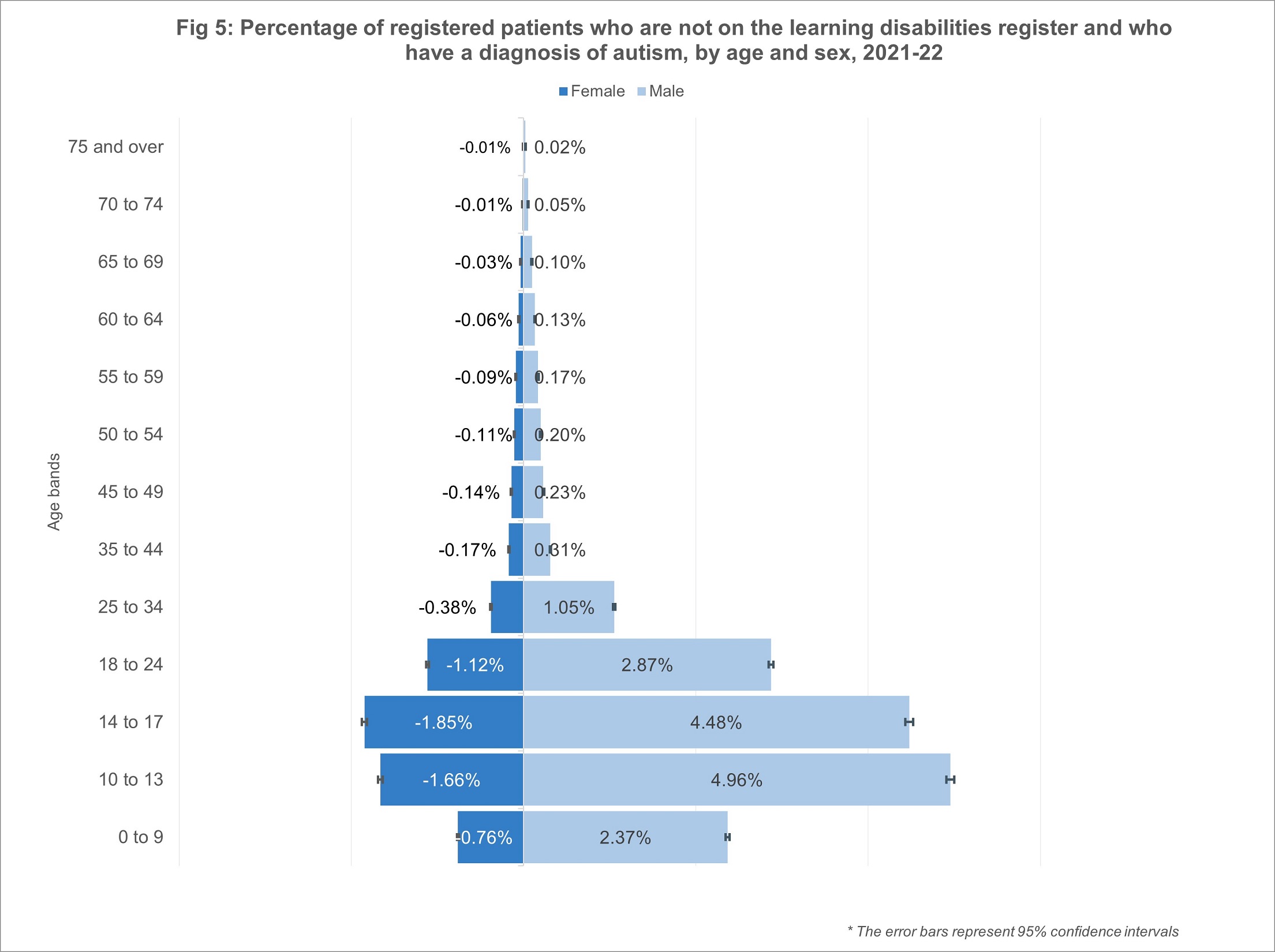
The recorded prevalence of autism is greatest in young males in both patients with learning disabilities (figure 4) and patients without learning disabilities (figure 5).
Last edited: 13 May 2026 4:42 pm