Publication, Part of Health and Care of People with Learning Disabilities
Health and Care of People with Learning Disabilities, Experimental Statistics 2021 to 2022
Experimental statistics, Other reports and statistics, Official statistics in development
Data Quality Notice
NHS England had identified an issue with the data for the following indicator which was reported in the Interactive Visualisation Tool and the data csv file for this publication:
LDOB080 - Number of patients recorded on their general practice’s Learning Disabilities Register aged 14 years or over who have received an annual learning disability health check and have been provided with a health action plan, as at the end of the reporting period.
The proportion of people on the learning disability register with a heath check and health action plan was lower than expected. We have investigated the issue and found an error in the data extraction. We have therefore removed LDOB080 from the published Power BI and csv files for years 2019-20 through to 2024-25. An alternative source of this data is available for this indicator and we recommend that you refer to the Learning Disability Health Check Scheme publication for March 2022: Learning Disabilities Health Check Scheme - NHS England Digital
13 May 2026 16:41 PM
Attention deficit hyperactivity disorder (ADHD) and epilepsy
ADHD
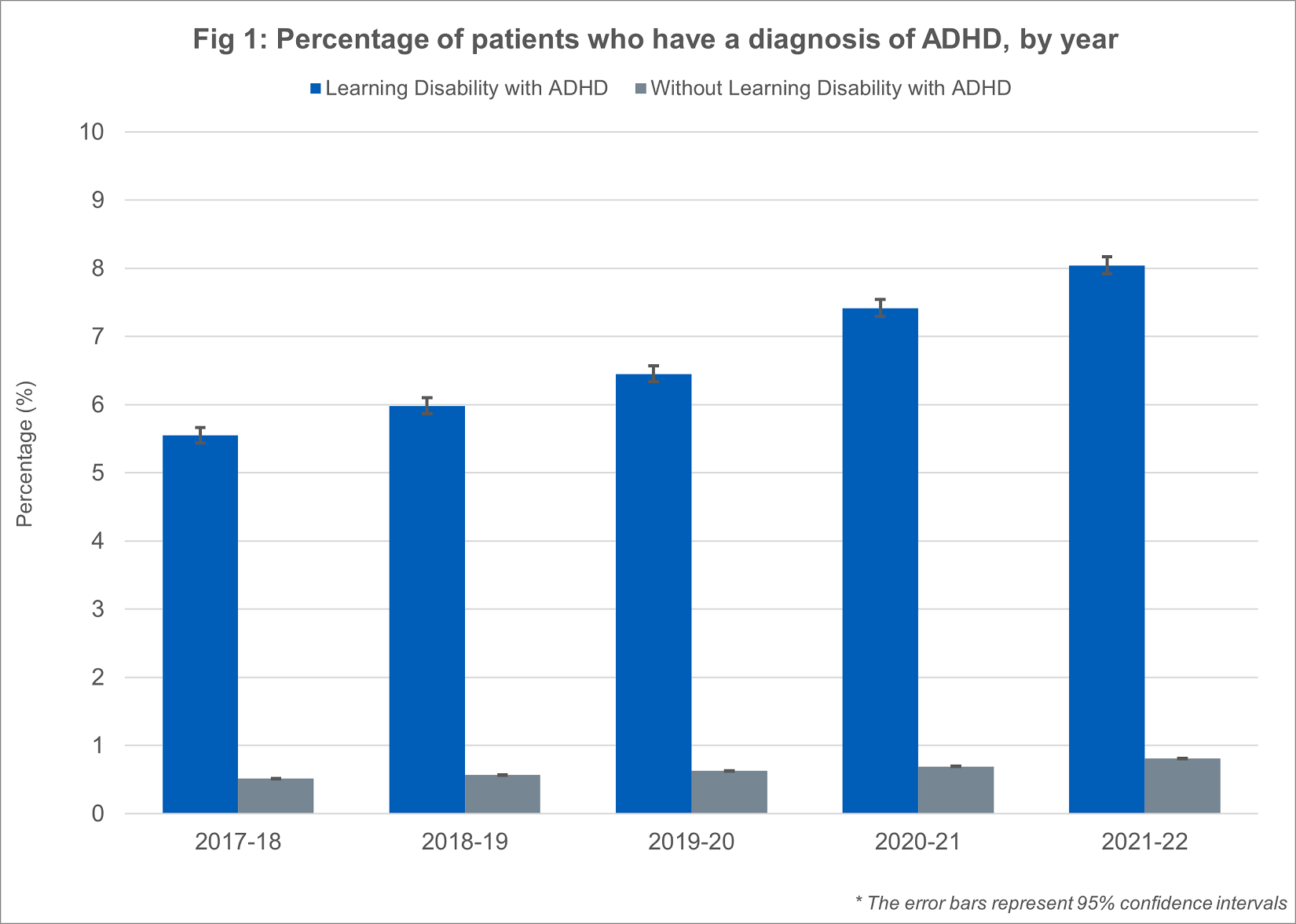
The percentage of patients with a learning disability who also have a diagnosis of ADHD is significantly greater than the percentage of the population who have a diagnosis of ADHD but do not have a learning disability.
The percentage of patients with a learning disability, who also have a diagnosis of ADHD has risen steadily between 2017-18 (5.5%) and 2021-22 (8.0%), whilst the proportion without a learning disability who have a diagnosis of ADHD rose by 0.3 percentage points (0.5% to 0.8%).
ADHD with autism
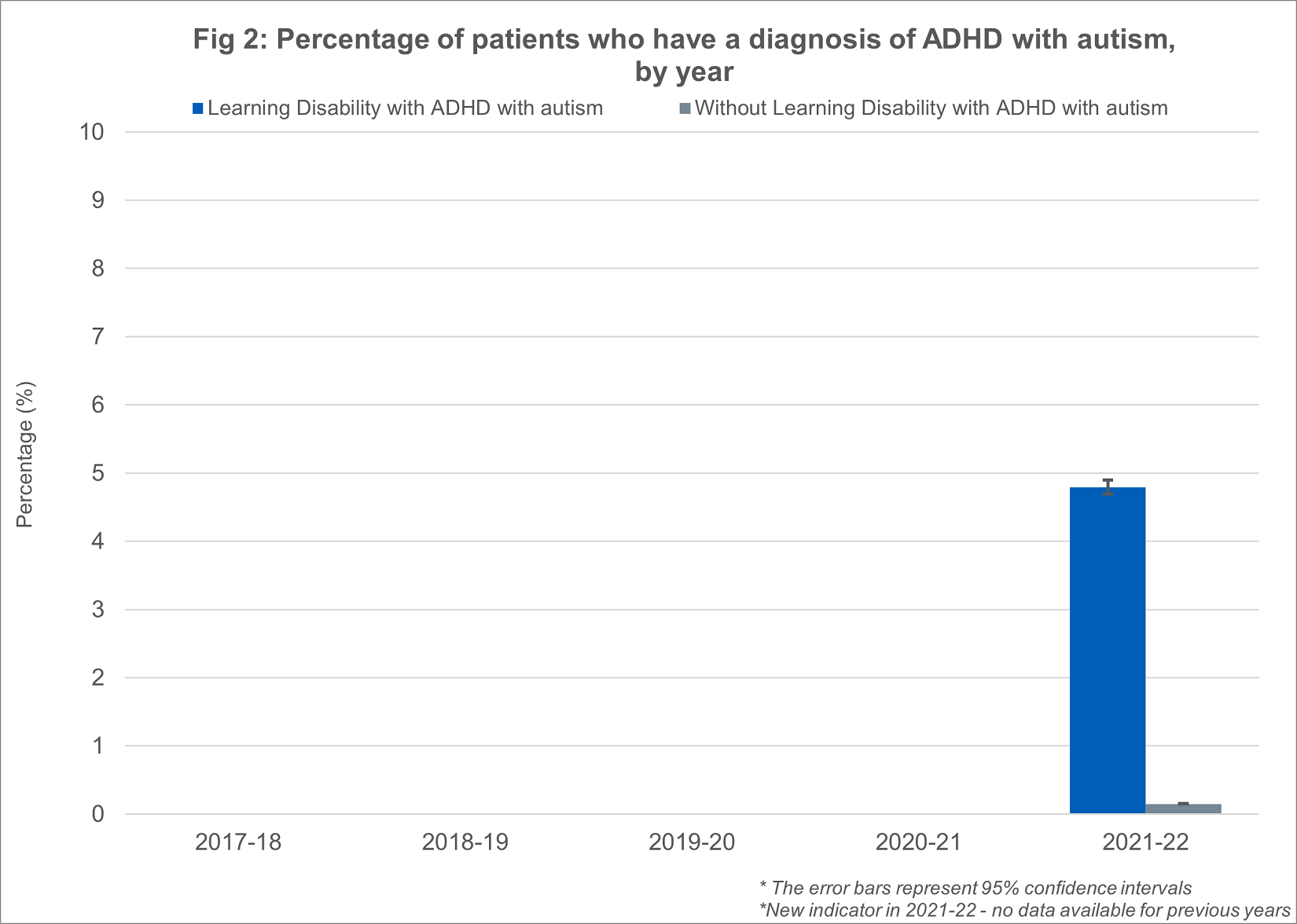
This is a new indicator introduced in 2021-22. The percentage of patients with a learning disability who have a diagnosis of ADHD and a diagnosis of autism was 4.8% compared to 0.1% for those without a learning disability (a difference of 4.6 percentage points).
ADHD with melatonin
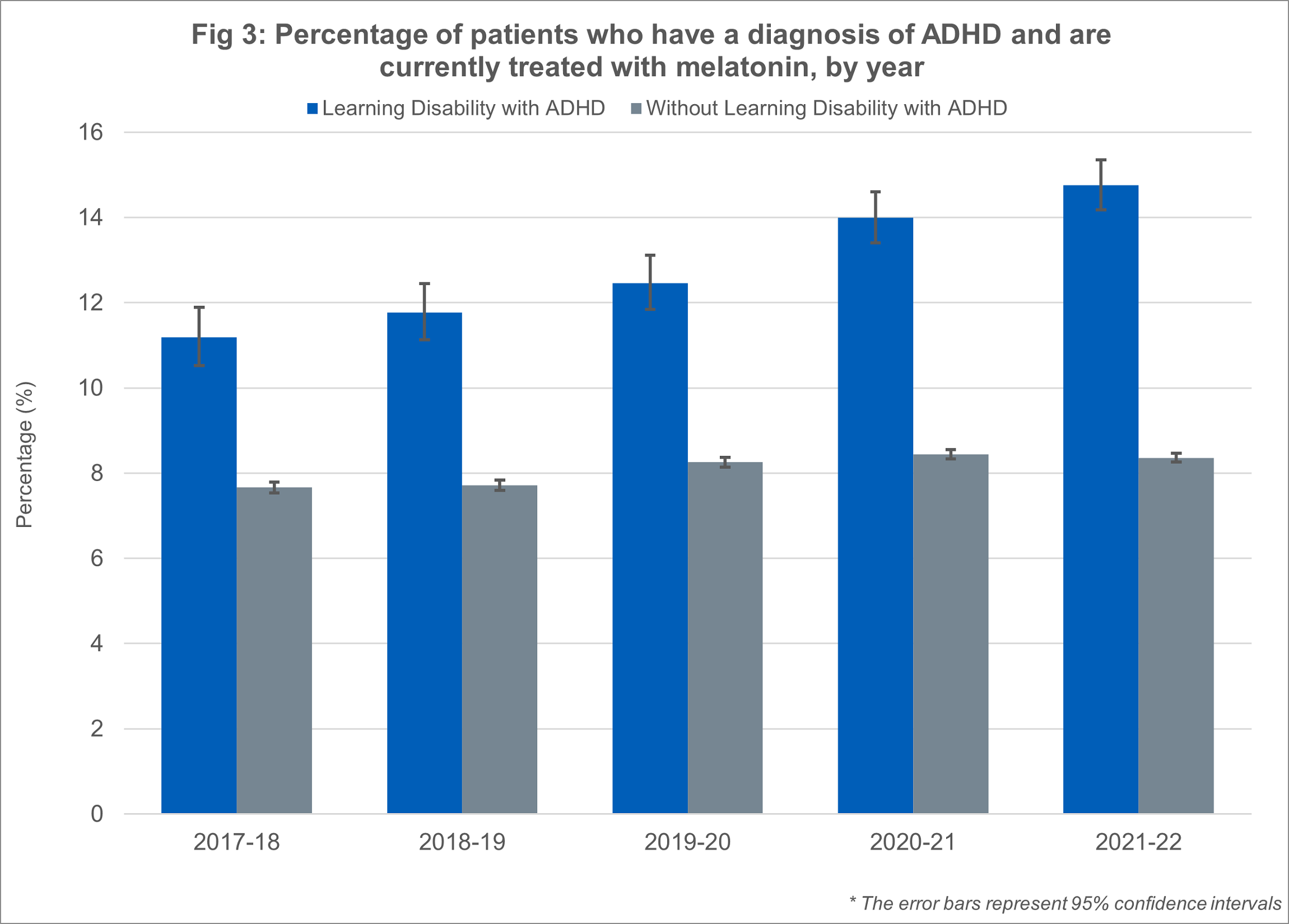
Each year between 2017-18 and 2021-22, the proportion of patients who have a diagnosis of ADHD and are currently treated with melatonin has been significantly greater amongst patients with a learning disability than amongst patients who do not have a learning disability.
The percentage of patients with a learning disability who have also been diagnosed with ADHD and are currently treated with melatonin rose to 14.8% in 2021-22. The percentage of patients without a learning disability who have a diagnosis of ADHD and are currently treated with melatonin in 2021-22 remained the same as in 2020-21 (8.4%).
Epilepsy and on drug treatment for epilepsy
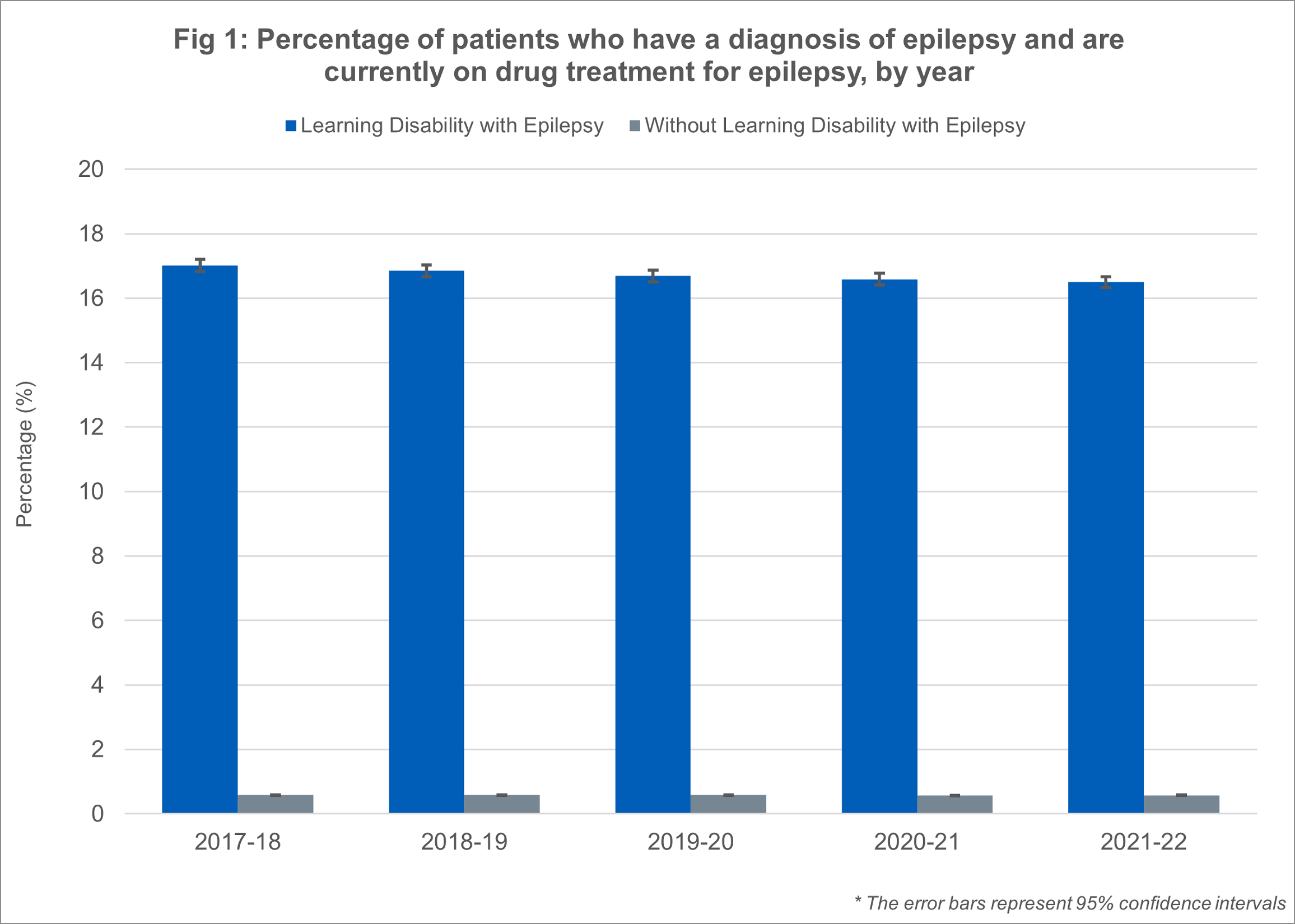
The percentage of patients with a learning disability who have a diagnosis of epilepsy and are currently prescribed epilepsy drugs is significantly greater than the percentage of patients without a learning disability who have a diagnosis of epilepsy and are currently prescribed epilepsy drugs for each year between 2017-18 and 2021-22.
Although the percentage of patients with a learning disability who have a diagnosis of epilepsy and are currently prescribed epilepsy drugs has fallen steadily between 2017-18 (17.0%) and 2021-22 (16.5%), this has remained stable at 0.6% in those without a learning disability who have a diagnosis of epilepsy and are currently prescribed epilepsy drugs.
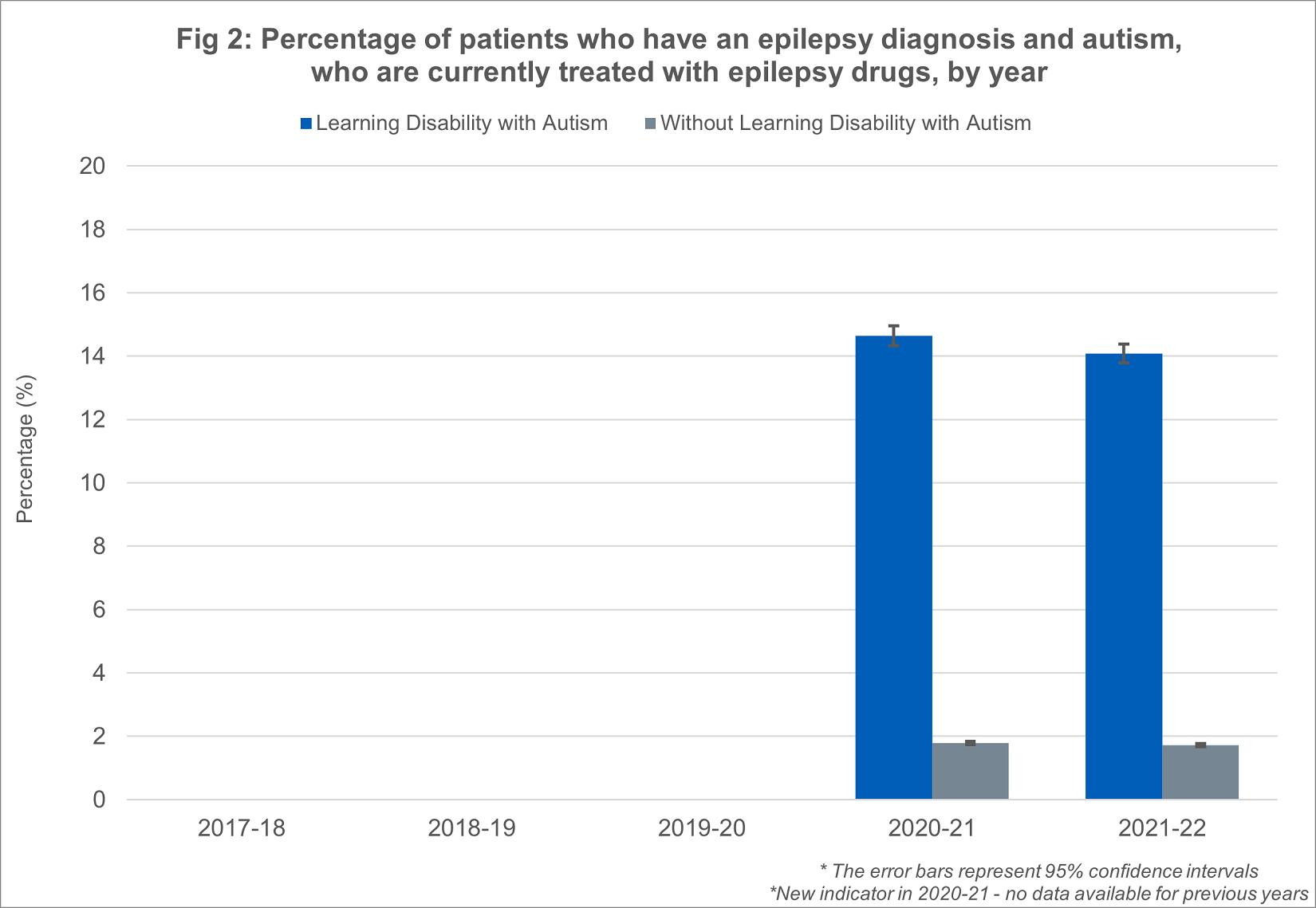
Epilepsy and on drug treatment for epilepsy, with autism
Last edited: 13 May 2026 4:42 pm