Part of Clinical system migration guide
Digital adoption - change management
Guides staff through transitions by providing clear information and support.
Digital adoption - change management
Digital adoption explains how good change management helps practices move to new technology. It can help practices to transition smoothly, ensuring staff are:
- engaged
- supported
- ready to deliver improved patient care with new technology
Change management is about making sure staff are able to handle changes by giving them:
- support
- information
- encouragement
This is achieved through:
- correct engagement and planning
- clear engagement
- capturing current and future business processes
- stakeholder management
- change impact analysis
- ongoing support for staff
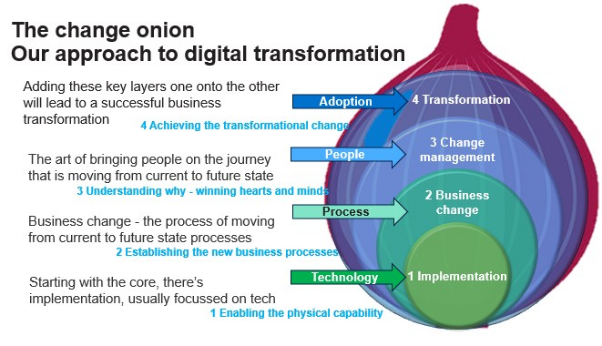
The change onion diagram below breaks down the key layers involved in transforming a business. It is broken down into 4 layers, starting with implementation through to transformation.
Who is involved
The people, teams or organisations who might be required in this stage of the migration are:
- GP practice stakeholders:
- practice manager
- practice staff
- clinicians
- patients/patient participation groups
- primary care network
- community services e.g.
- adult community nursing teams
- allied health professionals
- out of hours
- palliative hospice/hospice at home
- commissioning support unit (CSU)/IT support provider
- integrated care board (ICB)
- IT delivery partner - supplier
- secondary care providers
- mental health services
- preparation activities
- change management tools
Preparation activities
Identify a digital coach
Most practices already have someone who’s the go-to for system questions. They are sometimes called a super user or system champion. A digital coach is the person who learns the new system first. They get trained up, and help everyone else get used to it. They spot problems early and make switching over easier for the whole team.
Identify change agents and champions
Change agents are team members who help with the change. They know what needs to be done and can come from any area, for example, admin, clinical, or operational.
A change champion is someone who cheers on the change. They spread good vibes, talk about what’s happening, and deal with any worries or rumours within the team.
Assemble a change network
A change network is a group of people from the practice and beyond who help everyone stay in the loop and cope with changes. It includes the leadership team, change champions, change agents and project team members. They all work together to support new ways of doing things.
The network makes it easier to get everyone involved and talking. Even if the people leading the change can’t chat one to one with everybody, they can still build trust by being open and friendly. Trusted team members, like change agents or digital coaches, help connect everyone and keep things running smoothly.
This team is key to making change work. It’s not just about leaders—it’s about getting everyone’s ideas and support. By involving lots of different people, the network helps solve problems, gets more people on board, and makes the change last.
Change management tools
Make sure to check out the comprehensive change management toolkit. This is available via the Futures platform. Please note you will need to create a Futures account and request to join the change management area to access the toolkit. The toolkit provides interactive resources and templates to support successful change initiatives such as:
- change impact assessments
- stakeholder analysis
Last edited: 31 March 2026 10:14 am