NDRS Newsletter │29 February 2024 | |
An image showing the rare disease logo | |
Today, 29 February 2024, the rarest date in the calendar, is Rare Disease Day. The day marks an opportunity to raise awareness of the more than 7,000 rare conditions affecting people every day. With more than 3.5 million people in the UK living with a rare disease, the NHS is working to provide the most effective diagnosis, treatment and services for patients with rare conditions.
NDRS manages the National Congenital Anomaly and Rare Disease Registration Service (NCARDRS) which is a comprehensive registration service that collects, and quality assures data about people with congenital anomalies and rare diseases across the whole of England. NCARDRS was established in 2015 in response to the UK Rare Disease Strategy and the Chief Medical Officer’s recommendation to ensure nationwide coverage of congenital anomaly registration. Since then we have collected and curated data on 1800+ rare diseases, are a key partner in high profile clinical research such as MELODY (also see information about the webinar happening later today with HDR-UK) and recent developments include a new partnership for Epidermolysis Bullosa (EB), further work on rare autoimmune rheumatic diseases , Wilson’s disease, A1ATD, mitochondrial disease and McArdle and congenital hypothyroidism.
| |
*NEW RARE DISEASE DATA RELEASE* National Disease Registration Service release first information on rare disease prevalence in England | |
Today we are also releasing information on the prevalence of certain rare diseases and conditions in England. A rare disease is a disease or condition that occurs in less than 1 in every 2,000 people. Very often we do not know how many people actually have a condition, or how and where they are being treated for it. Though individually rare, collectively around 1 in 17 people are affected by a rare disease.
NDRS is committed to provide information to support the planning of services and improvement of treatments in England for people with a rare disease. We have taken information from our two registration services, NCARDRS and NCRAS, to report the point prevalence of selected rare diseases, congenital anomalies and rare cancers. Prevalence tells how many people living with and beyond a diagnosis at a given point in time and can help determine the number of people who may have unmet needs that can benefit from new treatments or support services. We have brought together data on 46 individual conditions that are considered rare and calculated the prevalence as of 31 December 2020.
For some of these conditions this is the first time national prevalence figures have been reported for England. Some of these conditions are exceptionally rare with only 1 or 2 cases per million people. It is only through collecting data at a national scale that we can bring together sufficient intelligence on these conditions to support research and develop the best care for people with rare diseases or conditions. NDRS’s population based disease registration service continues to expand the number of conditions registered, including rare genetic syndromes which cause an inherited predisposition to cancer. We also play a crucial role in supporting others to conduct high quality research through partnership working to generate more insights into specific rare diseases, e.g. our integral work with many of the MRC-NIHR funded rare disease nodes within the UK Rare Disease Research Platform.
“The National Disease Registration Service plays an underpinning role in delivering the Department of Health and Social Care England Rare Diseases Action Plans. This publication from NDRS helps our understanding of the number of people living with rare conditions, which is important for policy development, service delivery and research. It is a policy priority to maximise the potential of this important service and its abilities to collect, securely hold and maximise the uses of its crucial data set and to expand the number of conditions it is able to report on."
Kath Bainbridge
Head of Rare Diseases and Emerging Therapies, DHSC
You can find information about our work on the NDRS website and more of our rare disease publications, in the scientific journal library on our website including:
| |
NDRS win the Government Project Delivery Innovation Award | Image of the NDRS team with the Government Project Delivery Award | |
Against really tough competition across all Government departments in the UK, we are incredibly proud to announce we won the Government Project Delivery Innovation Award for the NDRS submission portal.
The submission portal ingests data from fourteen different datasets across the NHS*. It has allowed standardisation of a safe submission process, which can provide validation and reporting up front which has enabled providers to take ownership of their data before submission. It provides three ways to submit data; Upload, web form and API. It reduces burden on the front line and for ourselves, by having a functionality that streamlines and simplifies data submission. It includes real-time validations – 1000’s of validations for 12 datasets, a large proportion of these are written once and reused to improve data quality.
A staggering 14,192 batches (each batch can contain multiple files) of data have been processed to date and COSD records for over 1.4 million patients have flowed through the portal.
Being able to collect this data nationally is hugely beneficial. For example, it has transformed our work on Lynch syndrome and the development of a National Lynch Register to coordinate care on a national scale, improve patient outcomes, and reduce inequalities.
Huge congratulations to the IT team, data liaison and everyone else involved. For more information please contact us at [email protected]
*Datasets collected are (BRCA, COSD (main dataset), COSD_XML (pathology), RTDS, SACT, UPATH, GEN_REQ, GRAIL, USS, LYNCH, BIOCHEM, NIPT, PREG_LOSS, ENOTE).
| |
Data releases and publications | |
Update to Number of Cancers by Diagnosis Trust | The Number of cancers by Diagnosis Trust spreadsheet and interactive dashboard was published on Thursday 01 February. This is an update to the publication in September 2023 and includes the number of cancers by NHS Diagnosis Trust, cancer site and diagnosis year (2017-2021) with further breakdowns by the demographic factors: age-group, gender, major ethnic group and deprivation. | |
|
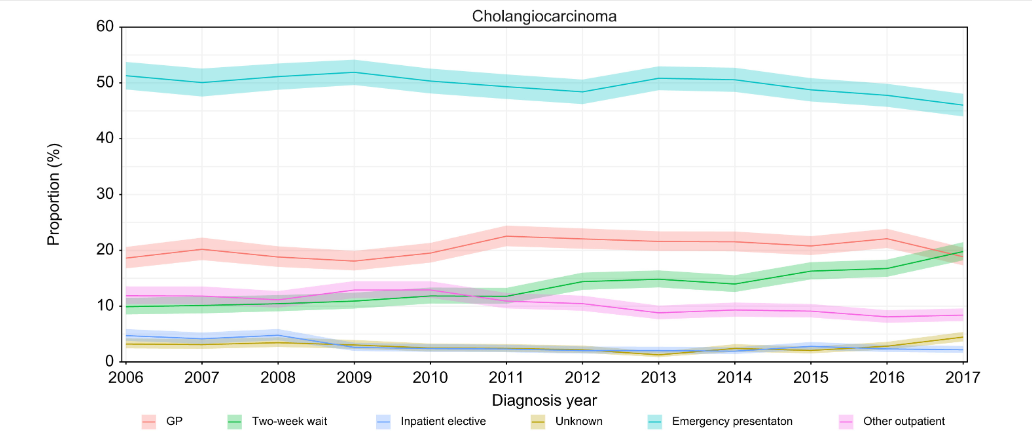
Paper published looking at temporal and regional variation in incidence, mortality and survival for biliary tract cancers | The study showed that biliary tract cancer cases, of which cholangiocarcinoma was the most common, doubled during the study period (2010-2018), with incidence and mortality rates consistently higher in cholangiocarcinoma and gallbladder cancer patients from the most socioeconomically deprived group. Net survival improved for all biliary tract cancer subtypes during the study period | |
A graph from the publication showing Proportion of patients and 95% confidence intervals by routes to diagnosis for cholangiocarcinoma | |
Lynch syndrome paper published | The paper about the development and description of the Lynch Registry was published online in eClinicalMedicine. It's a great achievement for the genomics team, and as it feeds into the bowel screening programme and will be of huge benefit to Lynch Syndrome patients in ensuring they are regularly and equitably called up for screening. | |
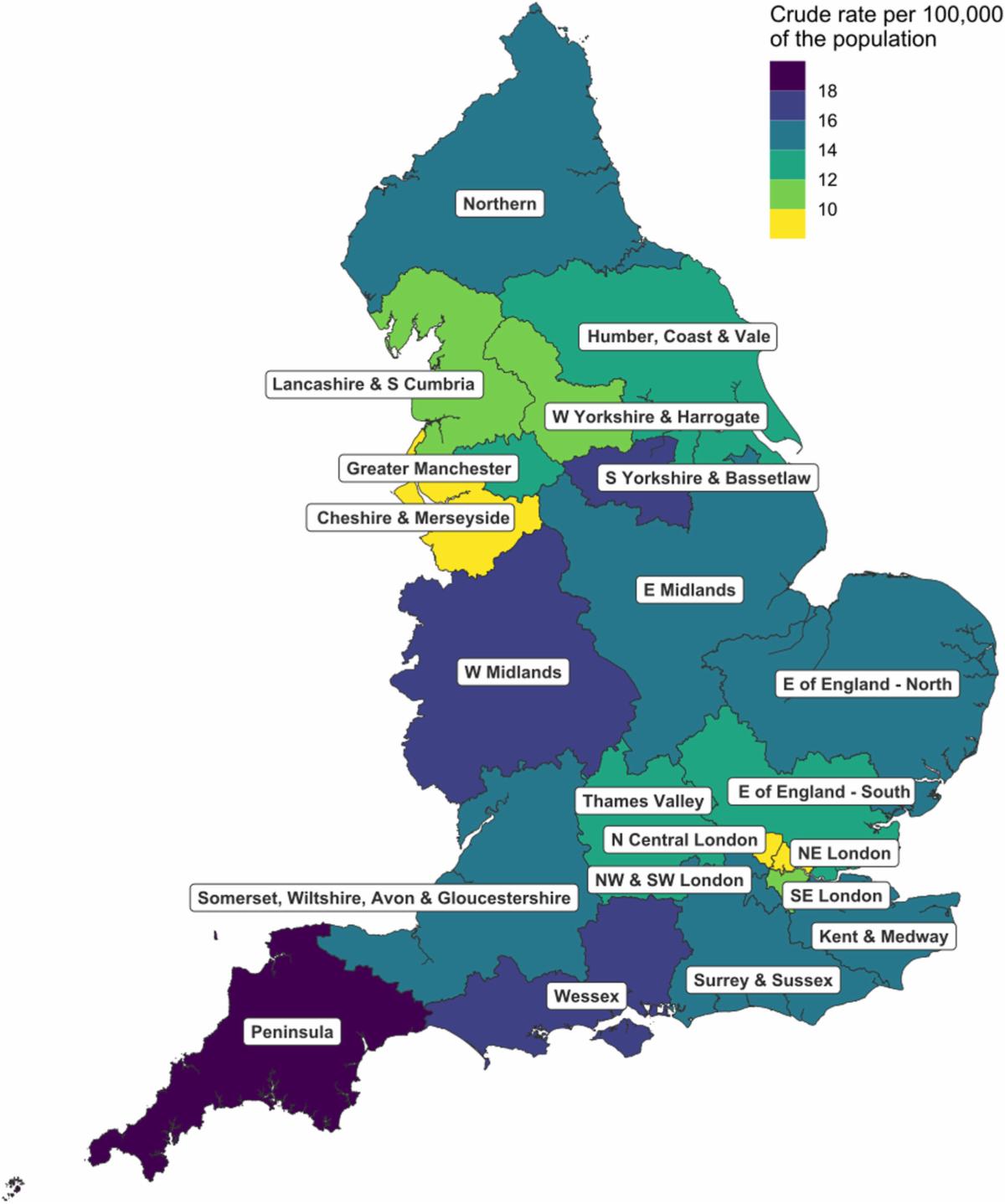
A map showing Crude rate of mismatch repair pathogenic variant carriers per 100,000 of the population by Cancer Alliance | |
Lynch Syndrome Molecular Diagnostic Pathway | |
A paper has been published in the European Journal of Human Genetics.
The peer-reviewed work shows the end-to-end pathway for diagnosis of Lynch syndrome from the entire cohort of patients diagnosed with colorectal cancer in 2019.
NDRS is the only organisation in the world to have done this sort of work at a national level!
We are working with the National Lynch Transformation Project to drive further improvements in diagnosis and care
| |
A icon showing a publication | |
Public release of 30-day mortality post-SACT case-mix adjusted rates (CMAR) analyses for prostate cancer and renal cell carcinoma | |
The latest 30-day mortality post-SACT case-mix adjusted rates (CMAR) reports are now publicly available on the website. Please click ‘open dashboard’ on the page to access the reports.
The latest release covers:
- Patients diagnosed with prostate cancer who received SACT treatment between 2020 and 2022
- Patients diagnosed with renal cell carcinoma who received SACT treatment between 2019 and 2022
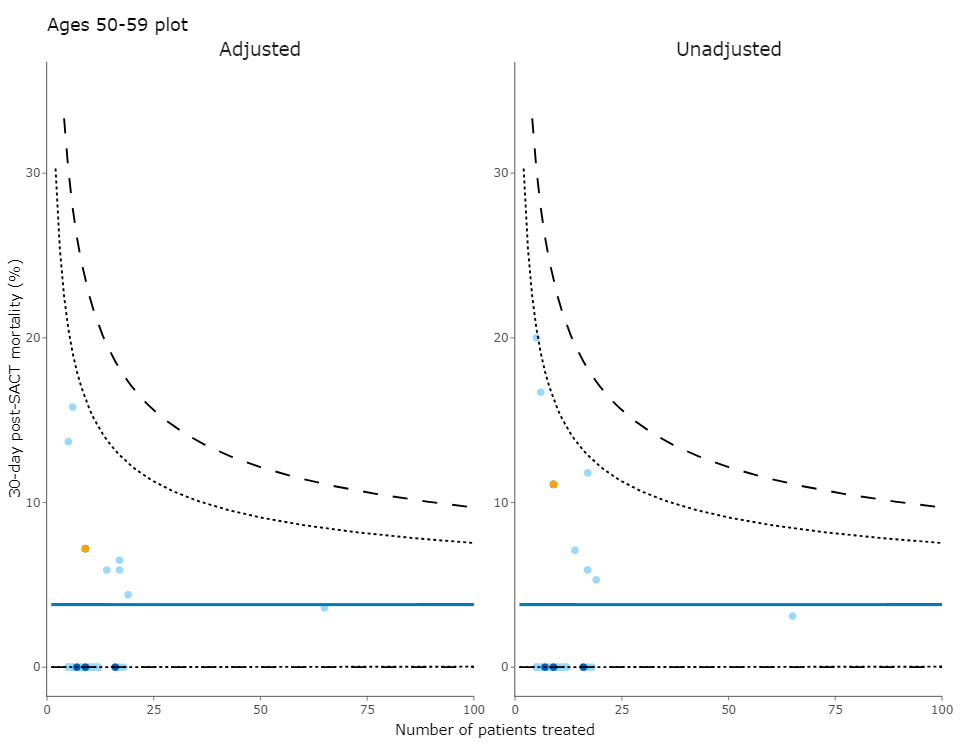
The CMAR analysis takes into account the wide variety of patients receiving treatment within each NHS trust and produces adjusted 30-day mortality rates to enable comparison between NHS trusts. This includes differences in gender (cancer type-dependent), age, deprivation, ethnicity, performance status, and co-morbidity score of patients within each NHS trust.
The reports were initially shared with NHS trusts in England in early January. NHS trusts had three weeks to review the reports, request patient data if required, and provide a comment to be displayed alongside the report on the website should they wish to do so.
Please contact the SACT data set team via [email protected] if you have any questions.
| |
An example plot taken from the dashboard showing 30-day mortality post-SACT rates by age group for patients treated for prostate cancer in an NHS trust between 2020 and 2022. | |
MELODY, a ground-breaking rare disease study, using NDRS and NHS data to enable mass-recruitment to important COVID-19 research of people with rare diseases, blood cancers and organ transplants by inviting them directly. Adam Taylor, Health Data Scientist at the University of Nottingham will be showcasing the MELODY project at the HDR-UK Midlands ‘Using data to improve care’ webinar event later today. | |
Spring webinar 2024 series | |
An image showing a person using a laptop | |
|
We are pleased to announce we will be running our next series of lunchtime webinars, beginning on 28 March.
The aim of the webinar series is:
- to help you navigate our information, resources and outputs more efficiently
- to support knowledge transfer and improve understanding of the methodologies or processes behind our work
All sessions will be recorded and available on the NDRS website so you can watch at another time. Please click on each link below for more information and to register for free.
A guide to the NDRS website, including a summary of key platforms and tools
Thursday 28 March 12-1pm
The latest on Routes to Diagnosis
Tuesday 9 April 12-1pm
The new congenital anomaly stats
Thursday 25 April 12-1pm
| |
A photo taken on the day of the COSD roadshow in London | |
|
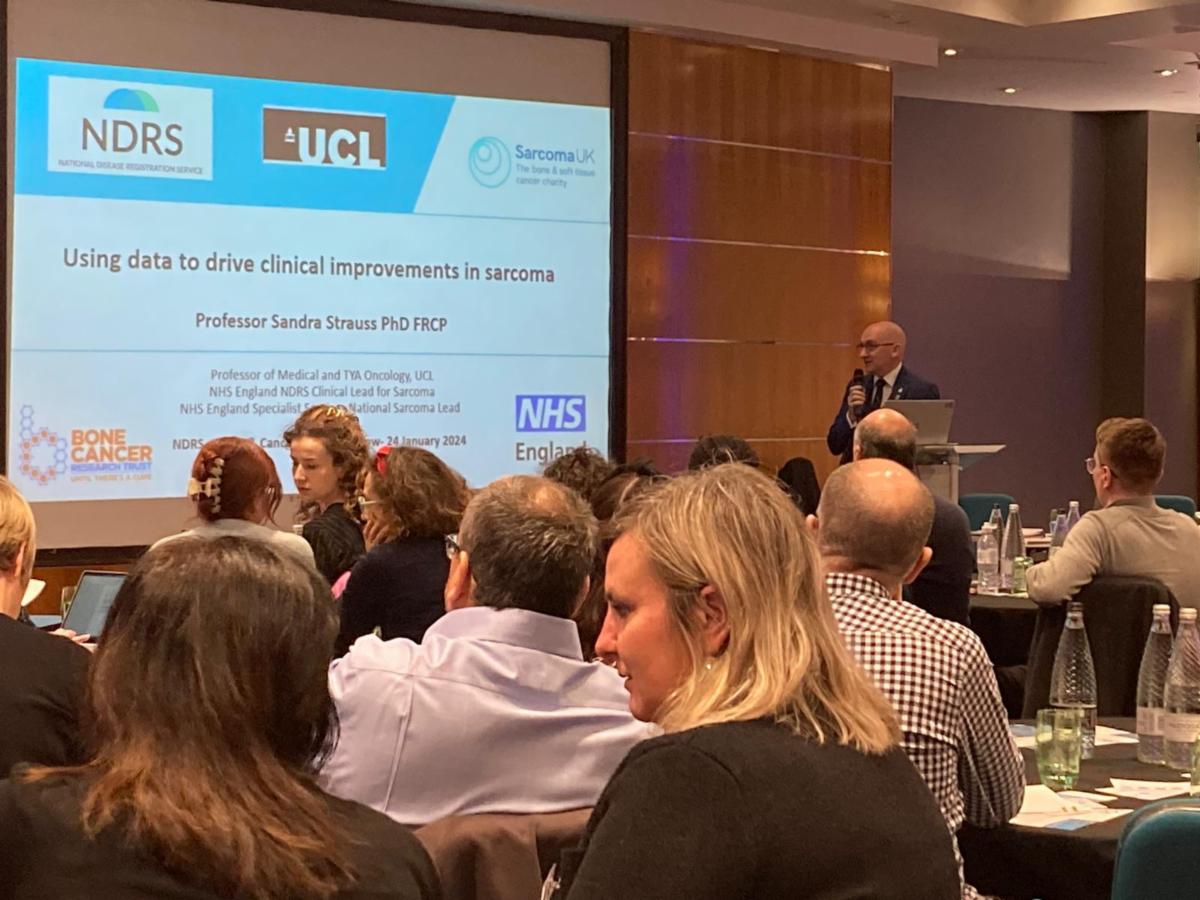
The eighth and final ‘NDRS – COSD and Cancer Data Roadshow’ was held in Leeds on Wednesday. This was the second largest event and there were great questions and networking throughout the day from the delegates and ended a successful set of roadshows around England.
This concludes the roadshows and all the presentations will be available soon on the COSD Roadshow webpage. There was a total of 780 people initially invited to the roadshows, of which 651 people formally registered (83.3%) with another 45 cancellations (5.4%) prior to their event. We had over 610 people actually attend the roadshows (nearly 95% of those registered).
Additional analysis from initial feedback was:
- 100% of people thought the event was good-to-excellent
- 100% of people thought the roadshow improved their knowledge of cancer data and information
- 98% of people thought the length of the roadshow was about right
| |
Thank you for reading. If you have any questions or queries please get in touch. We would welcome your feedback on this newsletter too, and if you wish to unsubscribe please follow the link below. | |
| | | |