NDRS Newsletter │19 October 2023

NDRS News

Each month we share the latest news from the National Disease Registration Service (NDRS) including recent publications, data releases and upcoming events. 


The National Disease Registration Service is part of NHS England and collects data from the NHS about cancer, rare diseases and congenital anomalies in England.


NDRS includes the National Cancer Registration and Analysis Service (NCRAS) and the National Congenital Anomaly and Rare Diseases Registration Service (NCARDRS). NDRS uses data provided by patients and collected by the NHS as part of their care and support. NDRS uses this data to detect changes in the health of the population and to help the NHS improve the diagnosis and treatment of these diseases.


Please share this newsletter with networks and colleagues

Others can sign up to our newsletter here.

Visit our website
Contact us
Updates from NDRS

Breast cancer month awareness

Icon showing breast

October is breast cancer awareness month. Work undertaken by and with NDRS has supported advances in preventing and treating breast cancer over the years.


In May this year the Breast screening After Radiotherapy Dataset (BARD) team won an award for 'Outstanding Benefit to Society through Research" award. BARD is a partnership programme with The Christie NHS Foundation Trust and The University of Manchester. BARD is a confidential database of women in England who have received radiotherapy involving breast tissue when aged between 10 to 35 years, which aims to improve long term outcomes in this population. It was established to ensure all patients at increased risk of breast cancer following radiotherapy are offered breast screening in line with national guidelines. It is also helping to ensure that patients are provided with the relevant information about the risk of breast cancer after radiotherapy, breast screening and research in the field. Find out more about BARD here


In the summer this year the BMJ published a paper on breast cancer mortality in patients diagnosed between 1993 and 2015. The study looks at variation by combinations of age, hormonal markers, nodal status, screening status, tumour size and grade to illustrate how outcomes have changed over time. These analyses show that mortality from breast cancer has significantly reduced over time and most women diagnosed at an early stage of disease are now likely to be long-term survivors of breast cancer. This received widespread coverage across the media, including the BBCSkyThe TimesThe Guardian and The Mail.


Other resources include the National Audit of Breast Cancer in Older Patients (NABCOP) and the Predict tool in partnership with the Winton Centre for Risk and Evidence Communication, University of Cambridge and HealthDataInsight (HDI).


If you have any questions about our work please contact us at [email protected]

Final notice: Retirement of NCIN and Chemodataset websites

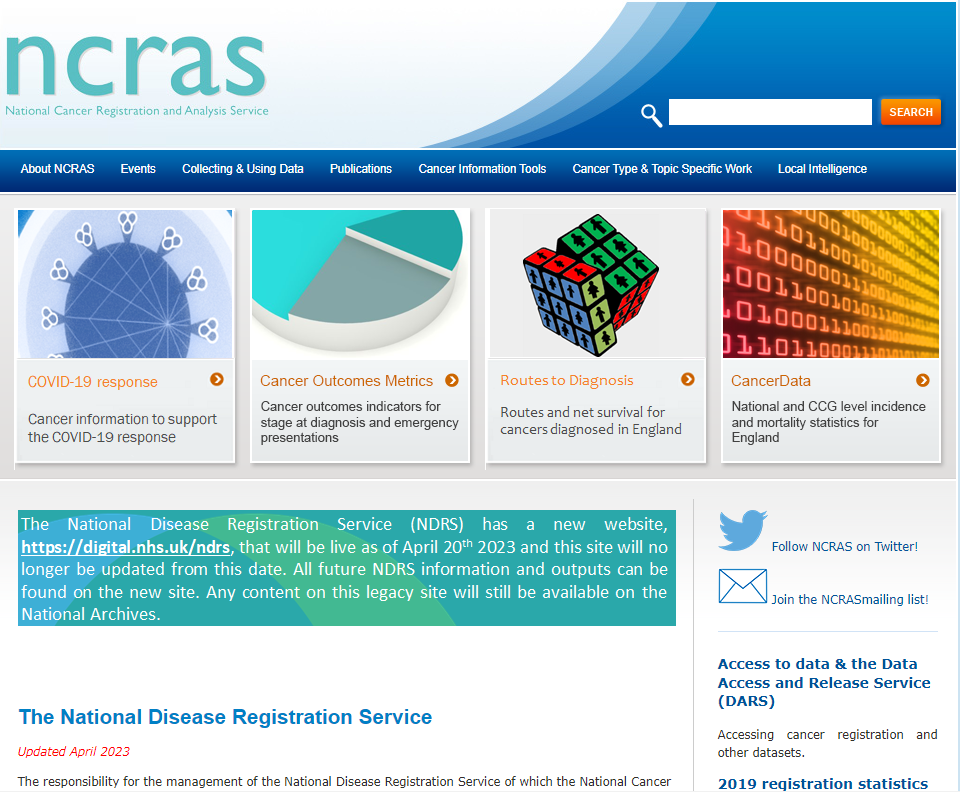
Screenshot of the legacy ncin.org.uk site

On 31 October we will officially retire the NCIN and Chemodataset websites. All relevant content has now been migrated to the new NDRS Website and the retired sites can still be accessed via the National Archives 

New suite of COSD data improvement tools

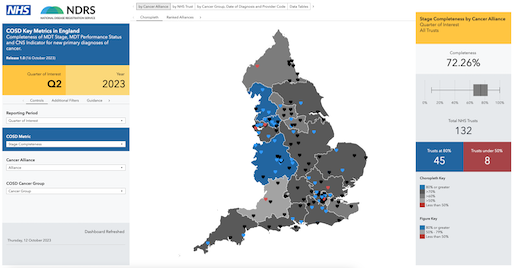
Screenshot of the COSD key metrics dashboard

This week the NDRS Business Intelligence and Data Liaison teams launched a brand-new suite of Cancer Outcomes and Services Dataset (COSD) data improvement tools on the CancerStats2 platform. This comprises of 3 new dashboards with daily updates, a monthly feedback report and a comprehensive live reference resource, that describes the common methods and datasets used across all reports in the suite.


This represents a complete transformation of the NDRS reporting outputs, with each dashboard specifically aligned with data improvement objectives, and most importantly, empowers COSD providers with the information they need to enact and monitor their own improvement programmes.

Find out more
Data releases and publications

Cancer Quality of Life Dashboard updated

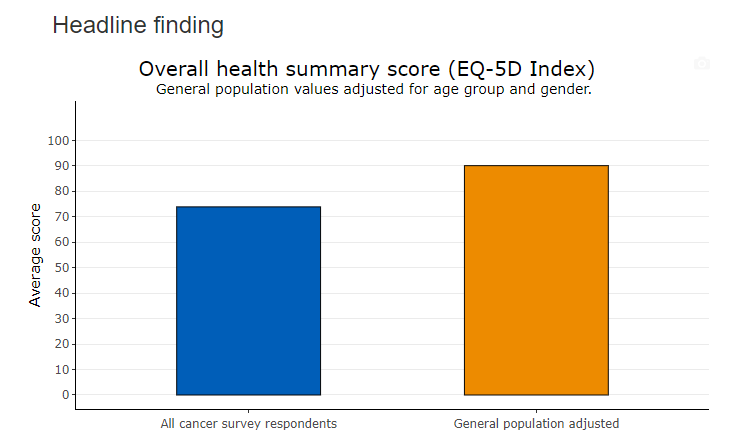
On the 21 September, the Cancer Quality of Life dashboard was updated with 6 months of data, equal to 34,723 additional responders. This release provides several new broad and detailed cancer type breakdowns:

  • Ovarian and Leukaemia cancer types can now be viewed by NHS Region
  • Uterine, Non-Hodgkin lymphoma, Head and Neck and Upper Gastrointestinal cancer types can now be viewed by Cancer Alliance
  • Uterine, Non-Hodgkin lymphoma, Head and Neck and Upper Gastrointestinal cancer types can now be viewed by Integrated Care Board


Find out more

A chart shows an overall summary of quality of life and compares the average score for cancer survey respondents to the general population.

Rapid Cancer Registration Data (RCRD) COVID-19 Incidence and Treatment dashboards

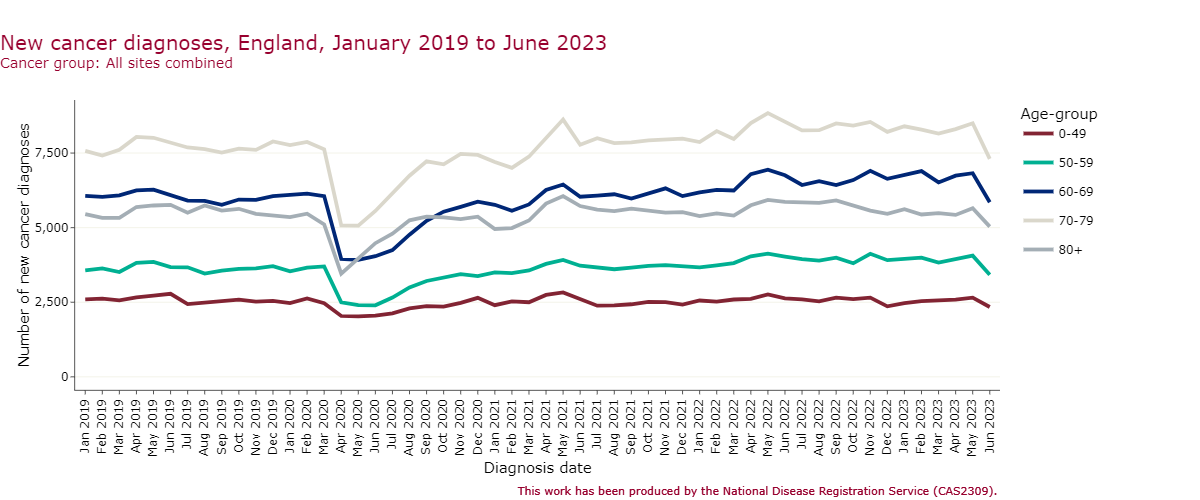
We continue to update the two Rapid Cancer Registration Data (RCRD) COVID-19 Incidence and Treatment dashboards. The latest monthly update included diagnoses up to June 2023, surgery data until March 2023, radiotherapy data until June 2023 and chemotherapy data until January 2023. The dashboards are available at: CancerData (publicly available) and CancerStats2 (requires a secure HSCN connection to access).

Find out more

A graph showing new cancer diagnoses in England between January 2019 and June 2023

Wilms Tumour paper published

A paper on Wilms Tumour was published, which compares routine NDRS data to clinical trials data. This is one of the first studies to compare these data sources. The study found similar treatment modalities and survival outcomes. They recommend similar studies with other paediatric cancers and further work with GDO data to assess data linkage quality and classification

Find out more

An Icon showing kidneys

New Sarcoma data story

The team at Sarcoma UK have collaborated with NDRS to publish an update to their improving sarcoma care data story on how patient data is being used to improve sarcoma care in England. This was the first population based study of soft tissue sarcomas in England.


Find out more

An Icon showing sarcoma

New histiocytic disease data story

Professor Joe West and the team at University of Nottingham have worked with NDRS to get a better understanding of histiocytic diseases. This was the first project where NDRS rare disease data was linked to cancer data.

Find out more

An Icon showing data

And finally

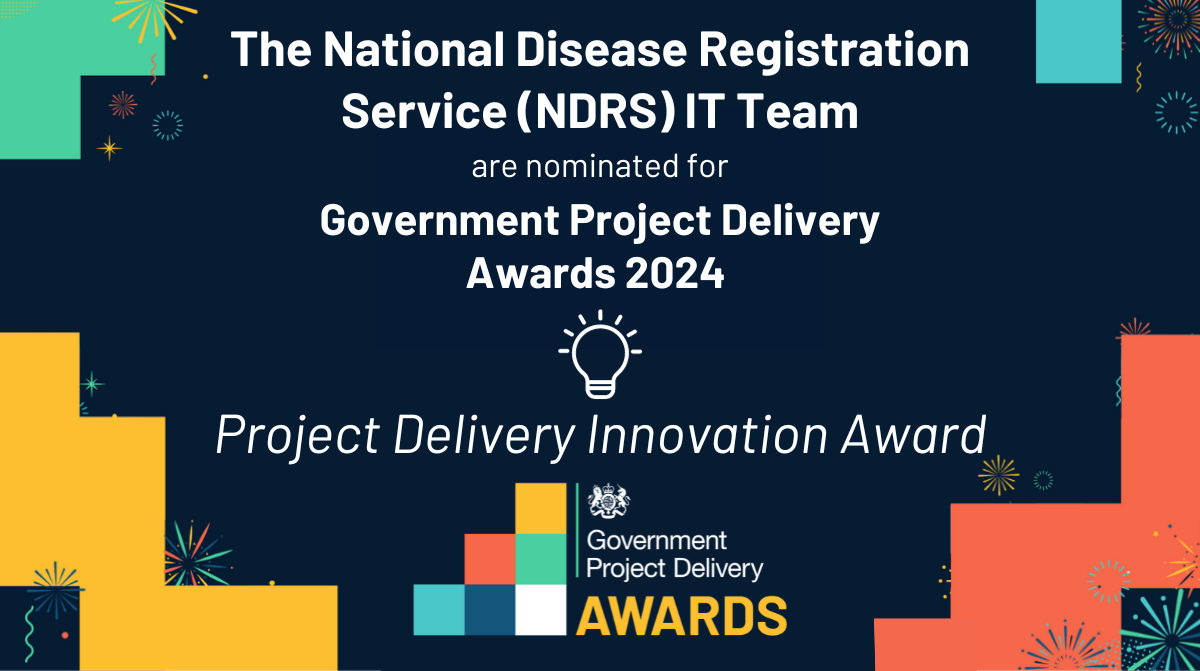
NDRS Information Technology team have been nominated for award

Image showing that NDRS Information Technology team have been nominated for Government Project Delivery Awards 2024

Huge congratulations to the NDRS IT Team who have been shortlisted for the Government Project Delivery Awards 2024 in the project delivery innovation category.

The team have successfully developed a simple and easy to use system for capturing validated, consistent, structured data on a national scale, previously not deemed possible. The creation of the portal and its continued evolution allows NDRS the most efficient method of receiving large volumes of qualitative data and prospectively offers huge flexibility and scope for future working. We will find out if they have won in February 2024.

Find out more
Thank you for reading. If you have any questions or queries please get in touch. We would welcome your feedback on this newsletter too, and if you wish to unsubscribe please follow the link below.
Contact us