NDRS Newsletter │17 November 2023

NDRS News

Each month we share the latest news from the National Disease Registration Service (NDRS) including recent publications, data releases and upcoming events. 


The National Disease Registration Service is part of NHS England and collects data from the NHS about cancer, rare diseases and congenital anomalies in England.


NDRS includes the National Cancer Registration and Analysis Service (NCRAS) and the National Congenital Anomaly and Rare Diseases Registration Service (NCARDRS). NDRS uses data provided by patients and collected by the NHS as part of their care and support. NDRS uses this data to detect changes in the health of the population and to help the NHS improve the diagnosis and treatment of these diseases.


Please share this newsletter with networks and colleagues

Others can sign up to our newsletter here.

Visit our website
Contact us
Updates from NDRS

User Research Report and Response Plan

Earlier this year we undertook user research with a wide range of stakeholders. Thank you to everyone who took part.


The report and our response plan are now available on the NDRS website. Over the last few months we have been working to make improvements and consider what else we can do to address the points raised.


These include:

  • improved signposting to resources and clearer labelling to enable you to find the information you are looking for
  • applying Reproducible Analytical Pipelines (RAP) principles to publications: reusable code functions, publication of code which will make our outputs more efficient and more transparent to users
  • updating the data dictionary to improve accessibility


There is a lot more in the report and response plan. We will continue to look at how we can improve the service and welcome your feedback at any time.

View response plan

Movember 2024

An image showing a ribbon representing prostate cancer awareness

It’s Movember, we are raising awareness on men’s health and wellbeing and highlighting the Get Data Out work on testicular and prostate cancer.


Data from our Get Data Out programme shows that there were 1852 testicular tumours including post-pubertal teratomas and 36,016 prostate cancer diagnoses diagnosed in 2020.


Working with charities, clinicians and researchers, the NDRS Get Data Out (GDO) programme publishes data about small groups of patients according to clinically important factors and those that affect treatment/outcomes. It is an interactive tool which is accompanied with an excel document with in depth stats on incidence and outcomes. 

View Get Data Out webpage
Data releases and publications

Colorectal cancer paper 

The Journal of Clinical Epidemiology recently published: Novel methods to define invasive procedures at the end-of-life were developed to improve quality of end of life care research: A population-based cohort study in colorectal cancer. This was a collaborative study between clinical and academic staff based at Bristol University, nearby hospital trusts, and NDRS. A clinical code list was developed and validated for invasive procedures, and trend in their use in the weeks leading up to end-of-life examined to shed light on possible over- or under-treatment.

View publication

An icon showing a colon

Lancet Oncology publication on future cancer risk after urgent suspected cancer referral

Lancet Oncology published a paper titled Future cancer risk after urgent suspected cancer referral in England when cancer is not found: a national cohort study, reporting analysis of Cancer Waiting Times and linked cancer registration data which was part of the Opportunities to Raise Cancer Awareness (ORCA) project.


The analysis showed that, where cancer is not found after an urgent suspected cancer (USC) referral, those referred have an increased risk of cancer in period 1 to 5 years after referral, compared to the patients of the same age and gender. It is suggested that this may be due to common risk factors and that, when cancer is not found, the end of the USC referral pathway may provide an opportunity to provide targeted interventions to raise cancer awareness and reduce future risk.

View publication

An Icon showing a publication

Cancer Registration Statistics, England 2021

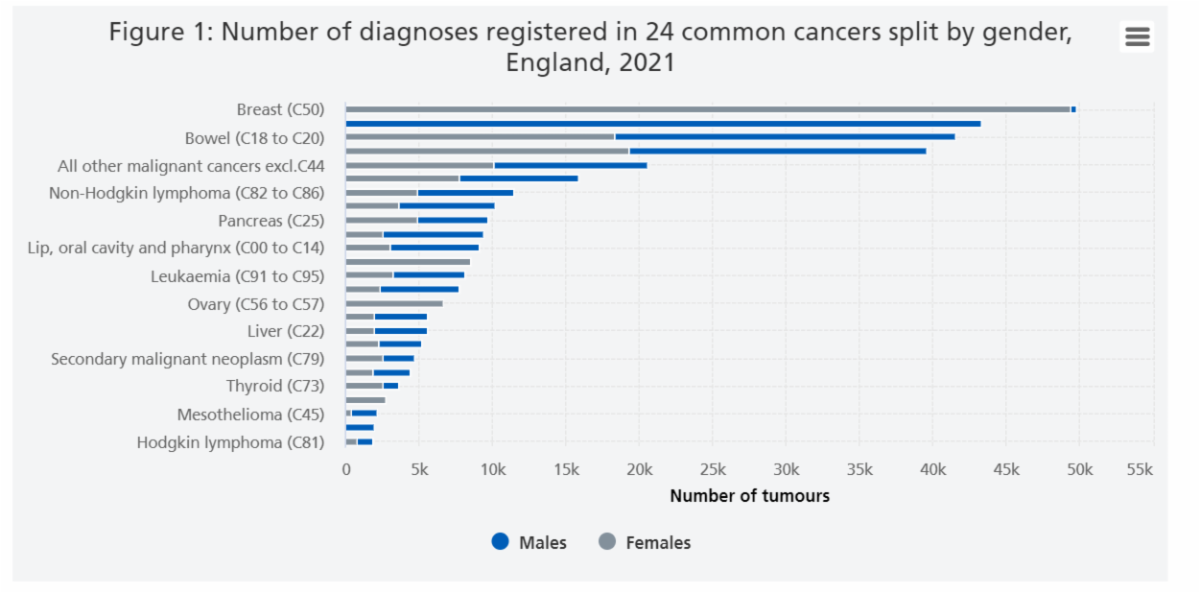
The Cancer Registration Statistics, England 2021 - First release, counts only report and data tables were published on 19th October. Cancer diagnoses have returned to pre-pandemic levels in 2021 and the Fry and Turnbull effect on prostate cancer diagnoses appears to have ended. 


For the first time this century, there were more diagnoses of bowel cancer (41,596) than lung cancer (39,635). This initial publication will contain counts of cancer diagnoses only, estimates and counts of the rates of both cancer incidence and mortality for 2021 will be provided after the populations needed are released.

View statistical publication

Screenshot of a graph from the publication which shows the number of new diagnoses in 24 common cancers split by gender. 

Prevalence of neural tube defect publication

We published a paper in Archives of Disease in Childhood establishing the baseline prevalence of neural tube defects (NTDs) in England prior to the planned mandatory fortification if non-wholemeal wheat flour with folic acid, between 2000 and 2019.


People have long been advised to supplement their diet with folic acid in advance of pregnancy to prevent NTDs but evidence shows that folate levels in those of childbearing age are dropping.


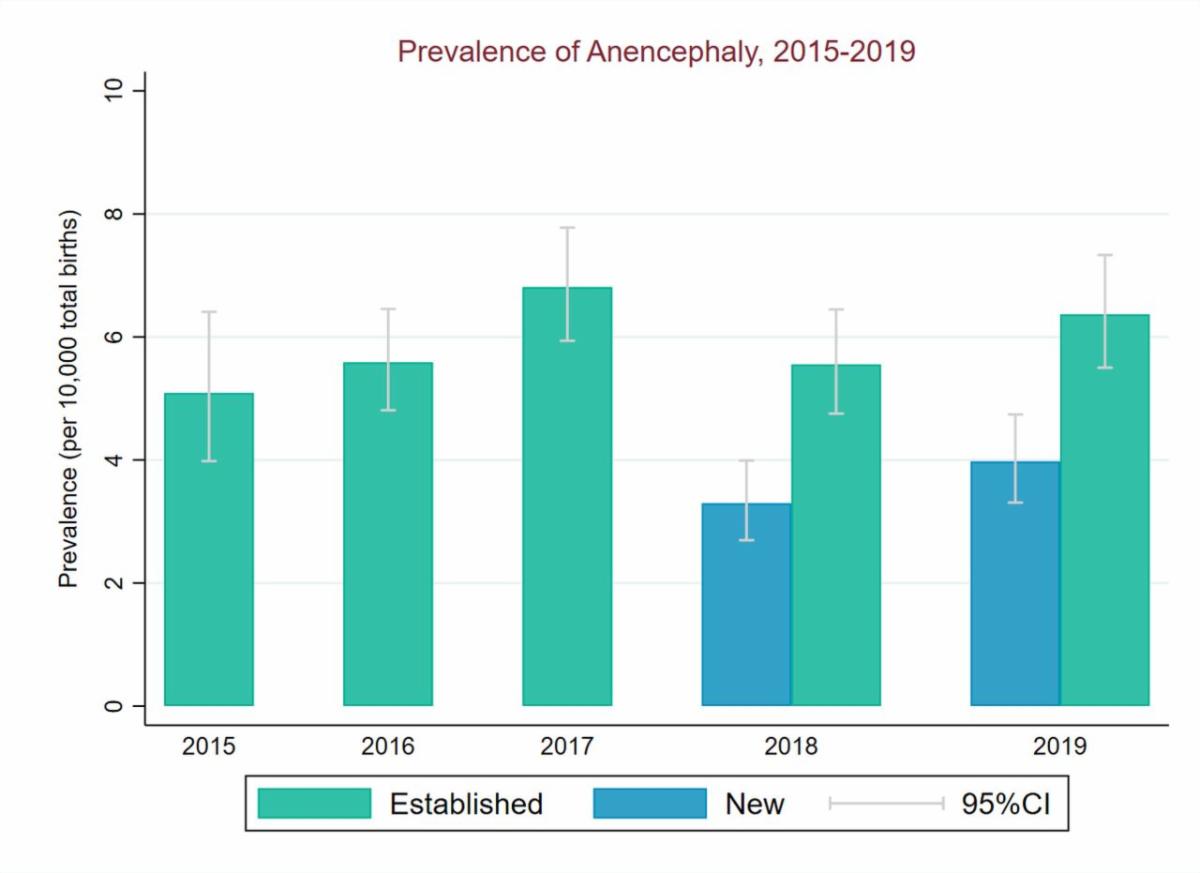
Our work combined legacy registration data with NCARDRS data and showed that NTD levels remained stable, until the formation of NCARDRS where there has been an increase in the prevalence of anencephaly. This may be a result of increased ascertainment and higher data quality relating to NCARDRS work with the FASP programme, as NTDs are conditions included in the audit. National and standardised CA registration is in place, enabling the evaluation of the impact of fortification on NTD prevalence.

Find out more

Screenshot of bar graph from publication showing total birth prevalence of anencephaly between 2015 and 2019 for established and new regions of NCARDRS

New Acute Oncology Assessment dashboard

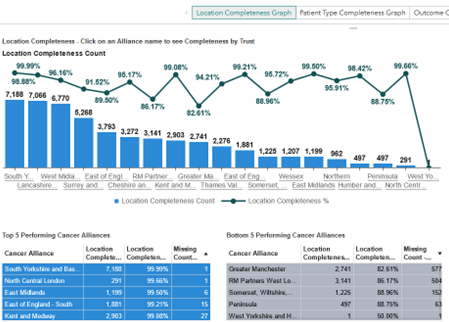
The NDRS Business Intelligence team launched a new Acute Oncology Assessments dashboard on the CancerStats2 platform (this requires a HSCN connection). This is a data improvement tool developed by NDRS in partnership with the Acute Oncology Service (AOS) data group.


The AOS supports cancer patients who attend hospital and are unwell with a complication of their cancer, side effects of their cancer treatment or have a new diagnosis of cancer. The purpose of these items is to capture the unplanned care cancer patients receive in an Acute Care environment.

View dashboard

Screenshot of the new acute oncology assessment dashboard

Recent updates to the SACT Time to First Treatment dashboards

Earlier this year, we published a new dashboard which reports the time taken for patients to be treated with SACT drugs once they have been approved by the National Institute of Health and Care Excellence (NICE) for routine commissioning in the NHS. 


In October, we updated the SACT time to first treatment (TTFT) dashboard with recently published SACT drugs from the National Institute for Health and Care Excellence (NICE) Cancer Drugs Fund (CDF) list and the latest available data. This includes 8 SACT drugs which were not included in the initial August 2023 release, and expected SACT activity up to June 2023.


The public dashboard provides a summary measure for England and is available on the NDRS website. A more detailed version of the dashboard is available to registered users on CancerStats2 where data is available at NHS trust and Cancer Alliance level.

View TTFT dashboard

An icon of a drug

PEUGIC root cause analysis project goes live nationally

On the 31 October, the PEUGIC root cause analysis project went live nationally. Over 3000 patients who underwent a non-diagnostic endoscopy 3-36 months prior to an upper gastrointestinal cancer diagnosis were identified through NCRAS data.


These cases were uploaded onto the Clinical Audit System which now hosts the PEUGIC audit alongside the PCCRC audit. Clinicians are prompted to review each case from their NHS England trust using a root cause analysis form.


Data collected for each case (tumour ID) is submitted to NCRAS and will be analysed in the summer of 2024 to inform best practice for endoscopy to reduce the risk of upper gastrointestinal cancers being missed at endoscopy. This project is in partnership with Health Data Insight.

View PPCRC audit

PEUGIC logo 

Thank you for reading. If you have any questions or queries please get in touch. We would welcome your feedback on this newsletter too, and if you wish to unsubscribe please follow the link below.
Contact us