NDRS Newsletter │15 December 2023

NDRS News

Each month we share the latest news from the National Disease Registration Service (NDRS) including recent publications, data releases and upcoming events. 


The National Disease Registration Service is part of NHS England and collects data from the NHS about cancer, rare diseases and congenital anomalies in England.


NDRS includes the National Cancer Registration and Analysis Service (NCRAS) and the National Congenital Anomaly and Rare Diseases Registration Service (NCARDRS). NDRS uses data provided by patients and collected by the NHS as part of their care and support. NDRS uses this data to detect changes in the health of the population and to help the NHS improve the diagnosis and treatment of these diseases.


Please share this newsletter with networks and colleagues

Others can sign up to our newsletter here.

Visit our website
Contact us

Message from Sarah Stevens, Associate Director

This year has seen some significant changes for NDRS, with the move into the new NHS England as part of what was NHS Digital and settling into our new home in Data & Analytics, Transformation Directorate under Ming Tang. Despite the disruptions that can often come with organisational change, I am proud of the commitment and focus of NDRS teams in continuing to deliver, as well as producing innovative and ground breaking work. Much of this has been achieved through our work in partnership with academia, third sector and the wider health system and supported by our clinical leads and wider stakeholders.


Our achievements over the past 12 months include;

  • the launch of our first ever Strategic Plan for NDRS and our new website
  • more timely data, further automation of quality assurance processes
  • 12 national/official statistics, 72 routine outputs including quarterly, monthly and weekly regular reports – for more information see our outputs catalogue - and over 90 NHS facing tools and dashboards
  • a partnership with Genomics England focused on the use of Natural Language Processing for standardising disparate genomic data
  • delivering our work on the NHS-Galleri GRAIL partnership
  • developing a new national lynch syndrome register, identifying patients for targeted bowel cancer screening
  • delivering data and analysis for the first annual Non Invasive Pre-Natal Testing (NIPT) outcome report as part of the National Screening Committee evaluation
  • nomination for Government Project Delivery Award held in early 2024 for the NDRS Submission Portal – a portal than ingests data from multiple different file types and data sets and applies real time validation
  • 32 peer reviewed publications including this month’s amazing announcement of receiving the BMJ award for best research paper of the year!


My thanks to all of you for your ongoing support, constructive challenge and involvement with NDRS. Wishing you all a happy festive season and we looking forward to working with you all in 2024.


Sarah

Updates from NDRS

International delegation visit from Indonesia’s Ministry of Health and Biomedical and Genome Science Initiative 

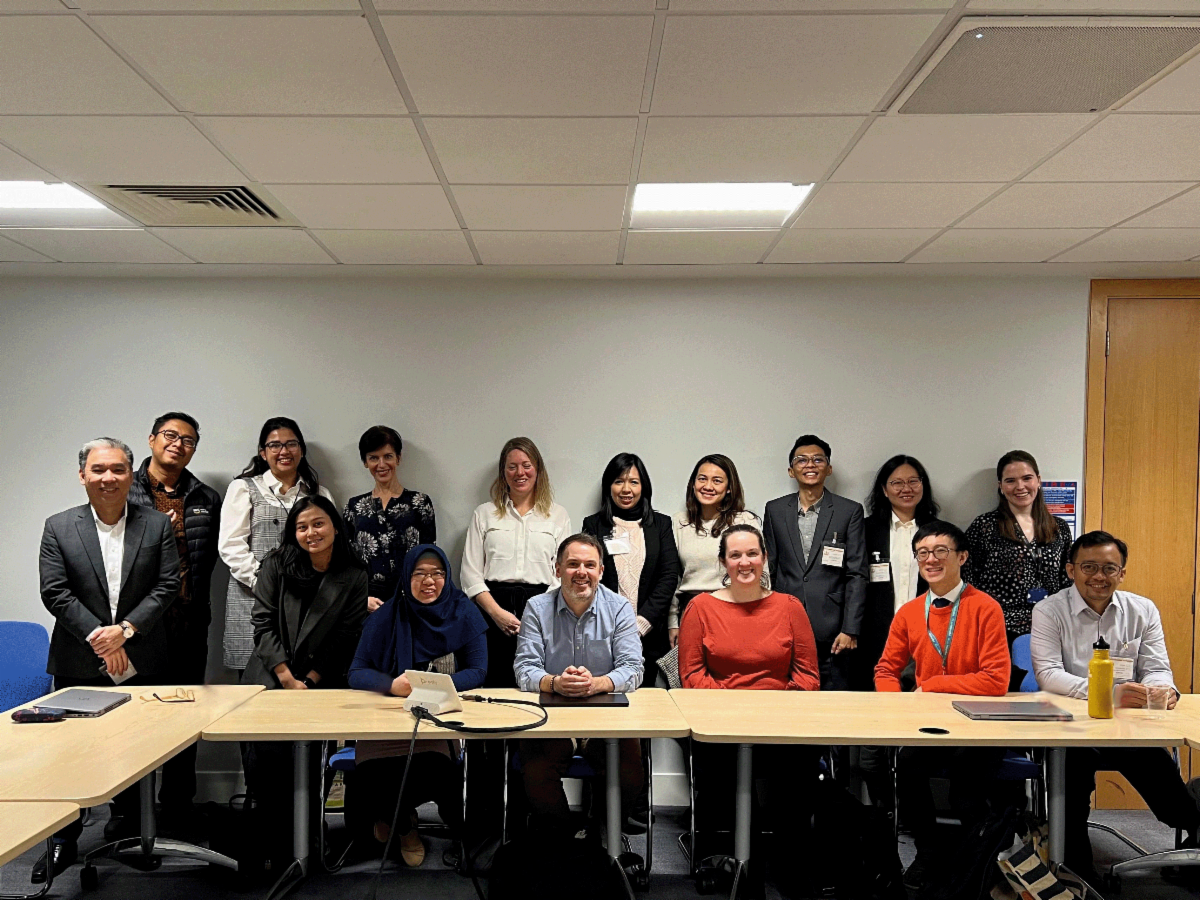
Sarah Stevens, Associate Director, and Steven Hardy, Head of Genomics and Rare Disease at the international delegation with colleagues from Indonesia’s Ministry of Health and Biomedical and Genome Science Initiative 

On Thursday 29 November, colleagues from NDRS met with an international delegation visiting from Indonesia’s Ministry of Health and Biomedical and Genome Science Initiative to share their work on collection, curation and analysis of genomic data in cancer and rare disease. Indonesia is currently creating a genomics roadmap visited the UK to learn from our approach to data management and analysis. They were keen to learn how NDRS is using genomic data to support direct care, population health, service evaluation and research and innovation.

Best research paper in the BMJ 2023

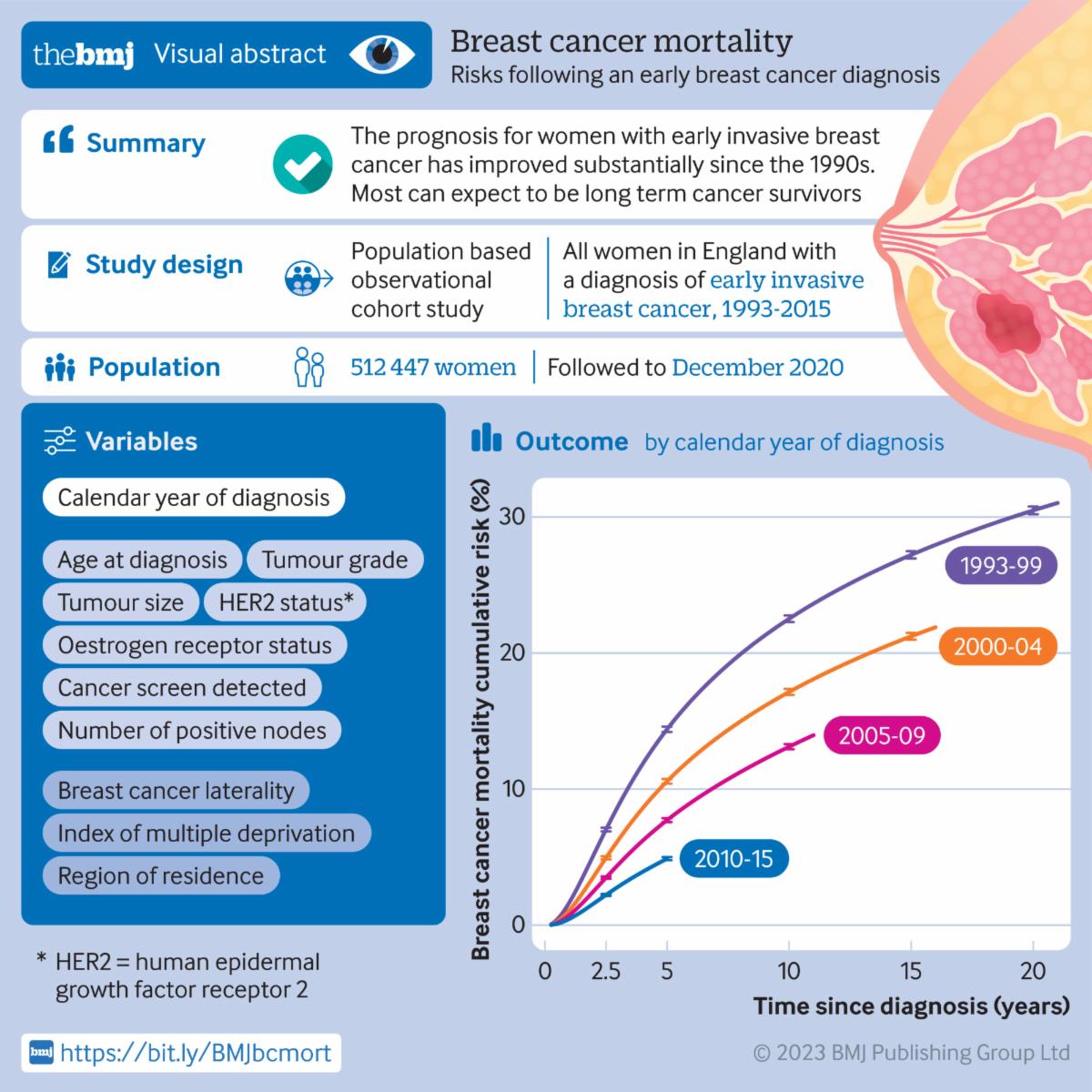
Infographic which is in the BMJ breast cancer mortality article

We are proud to share that our paper with University of Oxford on breast cancer mortality has been chosen as the best research paper of the year. Congratulations to everyone involved.


Breast cancer mortality in 500 000 women with early invasive breast cancer diagnosed in England, 1993-2015: population based observational cohort study) which got 65,257 accesses in first 3 months has been chosen as the best research paper in the BMJ this year. 


The study shows that, for women diagnosed with early breast cancer, the risk of dying from it within five years reduced substantially between the 1990s and 2010-15. For most women diagnosed recently their five year risk of breast cancer death was 3% or less

View publication
Data releases and publications

NHS England staging completeness dashboard

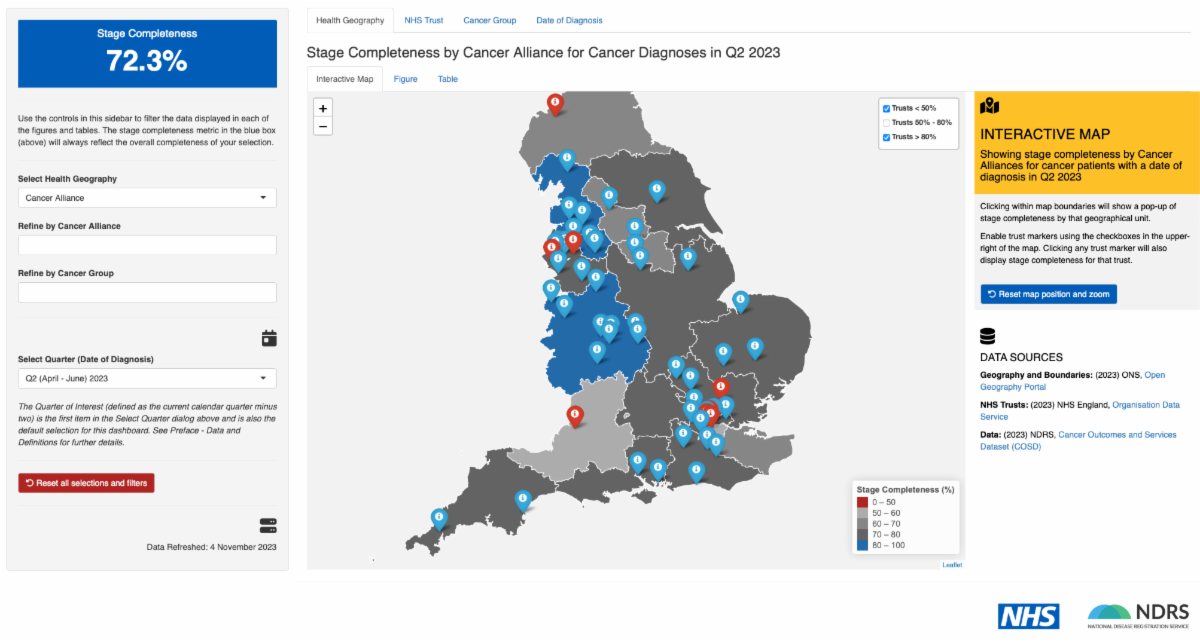
The Business Intelligence team launched a new public dashboard on the NDRS website aimed and improving staging data completeness across England. The dashboard shows the proportion of ‘stageable’ cancers, diagnosed, and discussed at MDTs at NHS Trusts, reported with a full stage. This is a long-standing collaborative project with NHS England and with full support from Professor Peter Johnson, National Clinical Director for Cancer, to support the 80% ambition as part of the NHS Long Term Plan. It is the first public release of a COSD data improvement dashboard outside of CancerStats2. 

View dashboard on NDRS site

A screenshot of the staging completeness dashboard showing an interactive map

The Cancer Drugs Fund (CDF) 

The SACT data set provides a unique opportunity to collect data on real-world treatment use of drugs available through the Cancer Drugs Fund and allows analysis to be carried out on treatment patterns, patient characteristics, and outcomes such as treatment duration and overall survival. The National Institute for Health and Care Excellence (NICE) use this information, alongside the results from clinical trials where appropriate, to assess whether the treatment should be made available for routine use within the NHS in England.


During 2023, the SACT data set team have completed SACT data collection for 11 CDF drugs and submitted a final report for each of them to NICE to provide the essential real-world evidence for these drugs to inform committee decisions. The team continue to collect data for a further 12 CDF drugs which are in the CDF active data collection stage.


Since the new Cancer Drugs Fund was introduced in 2016, 26 CDF drugs have been recommended for routine commissioning use in the NHS and over 50,000 patients have benefitted from these drugs, for which the SACT team have collected and analysed data for. 

This work is made possible by the NHS trusts in England who submit the data each month, and the patients who kindly allow us to use their treatment information. Thank you to all involved.  

View Cancer Drug Fund

An icon showing a drug

New NCDA study on the presenting symptoms of cancer

The English National Cancer Diagnosis Audit data including over fifty thousand patients with cancer was used to examine the relative frequency of 83 presenting symptoms across 38 cancer sites, and of 38 cancer sites by each of 83 presenting symptoms. The findings show a diverse distribution of presenting symptoms by cancer site, which may guide the choice of symptoms for inclusion in awareness campaigns or the choice of different investigation strategies. In addition, the findings highlight the importance of considering both overall and site-specific cancer risk in symptom-based referral guidelines as symptoms may relate to a diverse cancer site case-mix.

View publication

An Icon showing a publication

Thank you for reading. If you have any questions or queries please get in touch. We would welcome your feedback on this newsletter too, and if you wish to unsubscribe please follow the link below.
Contact us