Each month we share the latest news from the National Disease Registration Service (NDRS) including recent publications, data releases and upcoming events.
This month we highlight NDRS's role in delivering the ambitions of the UK rare disease framework, the COSD Level 3 dashboard is published, along with Incidence rates by ethnicity publication.
Please share this newsletter with networks and colleagues
Others can sign up to our newsletter here.
|
|
Our achievements in the last 12 months |
As we near the end of the business year, we take a look back at some of our achievements across NDRS over the last 12 months including the move from PHE
to our new home in NHS Digital. A huge thank you to all our stakeholders for your
ongoing support and involvement. A few of the highlights include:
- the creation of the Rapid Cancer Registration Data set which is updated monthly and now includes cancer diagnoses up to November 2021. A public rapid cancer registration and treatment dashboard is produced which aims to support cancer services in responding to the impact of the COVID-19 pandemic.
- NDRS’ Molecular and Genomics Team released national data for germline variants in mismatch repair (MMR) and other genes predisposing to colorectal cancer. This is the first time that national variant data for germline genetic tests on individuals has been released by NDRS, or indeed worldwide.
- we published the children, teenagers and young adults (CTYA) UK cancer statistics report. This is the first UK-wide report on cancers in children to be published in over a decade, and the first ever combining the analysis of data throughout the CTYA age spectrum.
- working with Newcastle University and Bowel Cancer UK, we have set up the first ever national register for Lynch syndrome. Lynch syndrome is a genetic condition that increases the lifetime risk of bowel cancer to up to 80%. The national register will help inform the monitoring, treatment and care of people with the condition. The data is also contributing to research looking at treatments to help prevent the cancers caused by Lynch syndrome.
- working with Nottingham University, as part of the RECORDER pioneering research project in to rare diseases, we are helping to deliver the ambitions of the UK Rare Disease Framework. The work of the RECORDER project is also being used to support government policy in relation to COVID-19 and identify patients who remain the most vulnerable after 3 or 4 COVID-19 vaccinations
- the NDRS SACT dataset was used in a recent NICE re-appraisal of the use of Pembrolizumab, which is now available as a routine treatment option for adjuvant treatment of completely resected stage 3 melanoma.
- NCARDRS released the first quarterly Non-Invasive Prenatal Testing (NIPT) report to NHS England’s Antenatal and Newborn Screening Programme. This report is helping to provide assurance that all eligible women are offered NIPT screening and that each woman who chooses to have screening has a conclusive screening result.
|
|
Data releases and publications |
|
NDRS’s role in delivering the ambitions of the UK Rare Disease Framework |
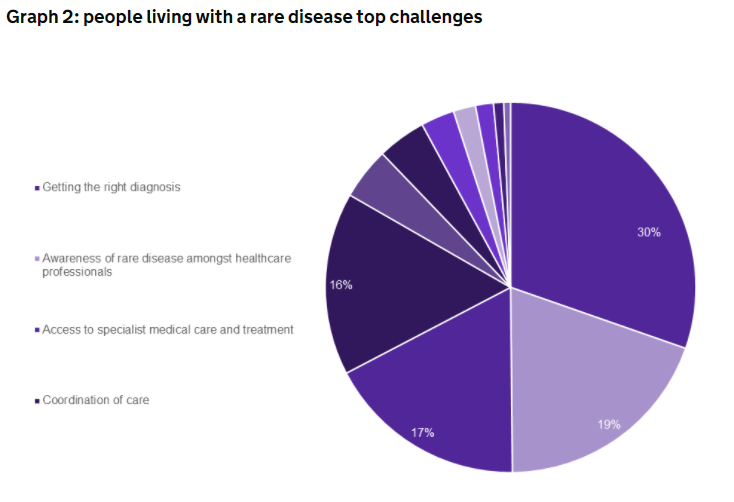
Rare Disease Day falls on the last day of February, raising awareness and generating change for those living with a rare disease and their families. This year the England Rare Diseases Action Plan 2022 was published to coincide with Rare Disease Day. The Action Plan sets out how NHS Digital, and other delivery partners, will deliver on the ambitions of the UK Rare Disease Framework. These ambitions include shortening the diagnostic journey, raising awareness of rare disease amongst healthcare professionals, and improving both coordination of care and access to specialist care and treatments for people with rare diseases. NHS Digital leads on two actions. One is to publish high-quality epidemiological and research papers to increase the understanding of rare diseases. The other is a joint action with NHSE/I to develop plans to share data and resources to put access to high-cost drug data into context of the wider rare disease population.
The information that NCARDRS collects about people affected by rare conditions can be used to support research, access to therapies, inform service design and even answer the straightforward question, 'how many people have this condition?'. We value the approach of the NCARDRS team. Collaboration with rare condition support organisations is fundamental to their work, and this will ensure that the right data is collected in the right way.
|
|
Graph showing top 4 challenges faced by people living with a rare disease |
|
Since July 2016, the National Institute for Health and Care Excellence (NICE) has been appraising all new cancer drugs, including those made available through the new Cancer Drugs Fund (CDF). The CDF aims to make promising treatments available to patients while NICE decides whether treatments should be approved routinely on the NHS.
A fundamental element, integral to the success of the CDF, is the cancer data partnership between NHS England and NHS Improvement and NHS Digital. The partnership provides insights into patient outcomes, including duration of treatment and survival, based on routinely reported data, including data from the Systemic Anti-Cancer Therapy dataset (SACT).
Our CDF reports, together with clinical trials data, inform NICE committee decision making on whether a drug should be made available to patients routinely on the NHS.
|
|
|
Cancer Registration leaflet for patients – new accessible digital version |
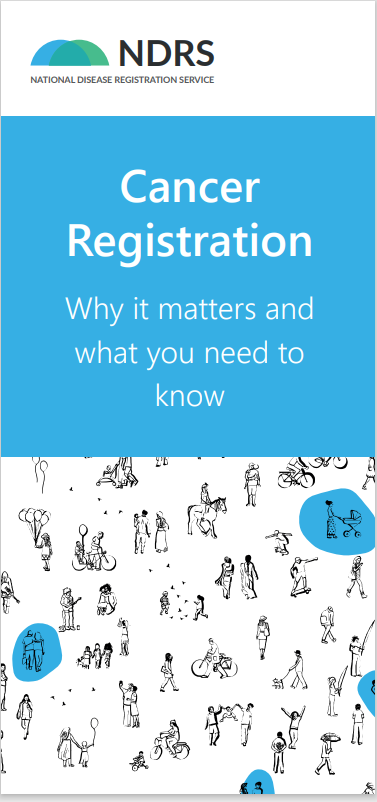
We are committed to providing information for every individual diagnosed with cancer to make them aware that their data will be collected by the National Disease Registration Service. Leaflets explaining that an individual’s data is collected and that they have a right to opt out of this data collection are distributed to NHS Trusts, Macmillan Cancer Centres and many other locations, annually approximately 650,000 leaflets. In response to changes to how patients access information and, in an effort, to move to more sustainable mechanisms, we have developed a digitally accessible version of the Cancer registration patient leaflet, allowing patients to access the information online.
There are 18 Trusts currently using the digital leaflet as part of a pilot. They have been displaying it in the waiting area on TV screens, adding it to their Trusts patient app and to their websites.
If you would be interested in having a copy of the digital leaflet for your organisation website, please contact us using the button below.
|
|
First page of the cancer registration leaflet |
|
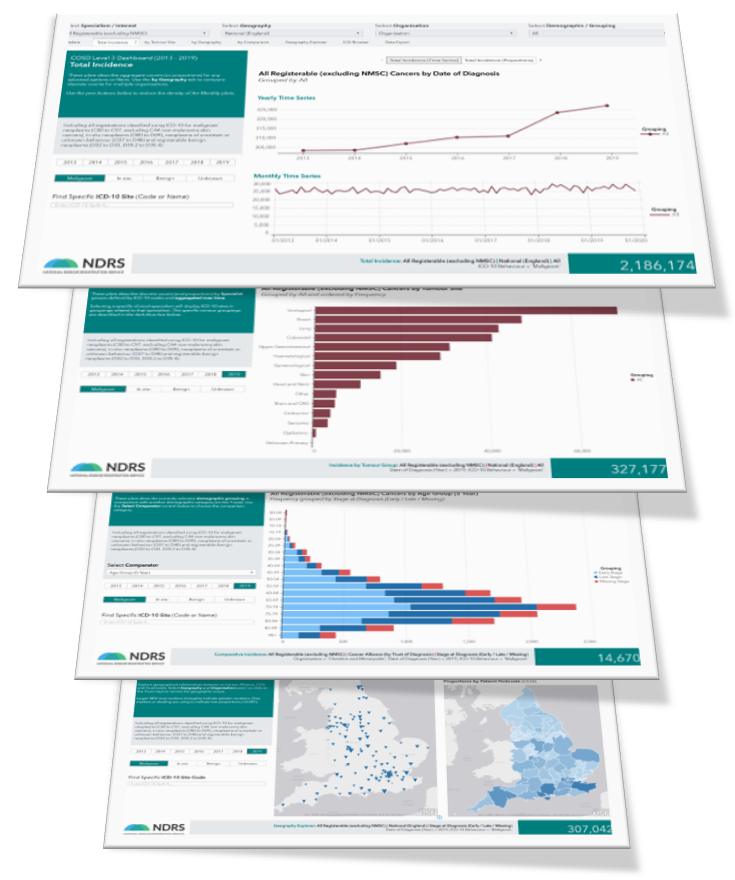
The COSD Level 3 dashboard is published on CancerStats2 (requires a secure HSCN connection to access) this week, presenting incidence and staging data for all cancer registrations in England from 2013 to 2019. This new design, using the latest processed data, includes six key insights providing perspectives encompassing Cancer Alliances, Clinical Commissioning Groups and NHS Trusts in addition to demographic groups including age, sex, ethnicity, deprivation, performance status and route to diagnosis.
We very much welcome your feedback on this release. Your comments will inform functionality and features in future releases and the roadmap for future development.
|
|
Image of the new Level 3 dashboards available on CancerStats2 |
|
Incidence rates by ethnicity publication |
|
|
Incidence rates by ethnicity were published this month in a paper in the BJC. Cancer Research UK led on this project, in partnership with NDRS, and using 2013-2017 NDRS data.
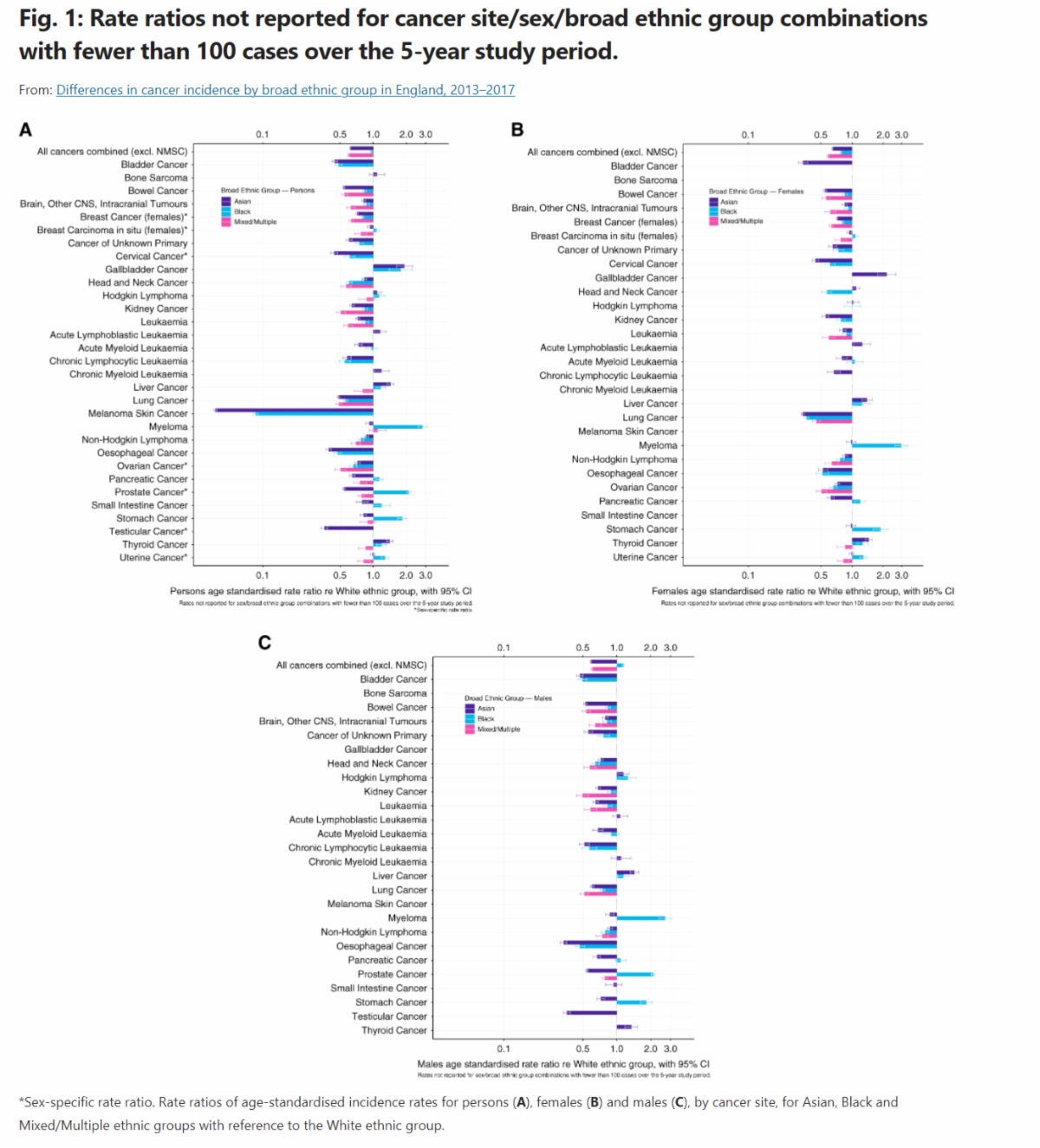
The full paper is available online, with the main findings summarised by Figure 1, where the much lower rates of melanoma skin cancer in non-white ethnic groups are the most striking outlier. Also of note are higher rates of prostate cancer and myeloma in the black ethnic group, and that in general for most cancers rates are higher in the white ethnic group than in other groups. The BBC news ran an article on the paper, as did The Guardian.
|
|
Image showing figure 1 in report Rate ratios not reported for cancer site/sex/broad ethnic group combinations with fewer than 100 cases over the 5-year study period
|
|
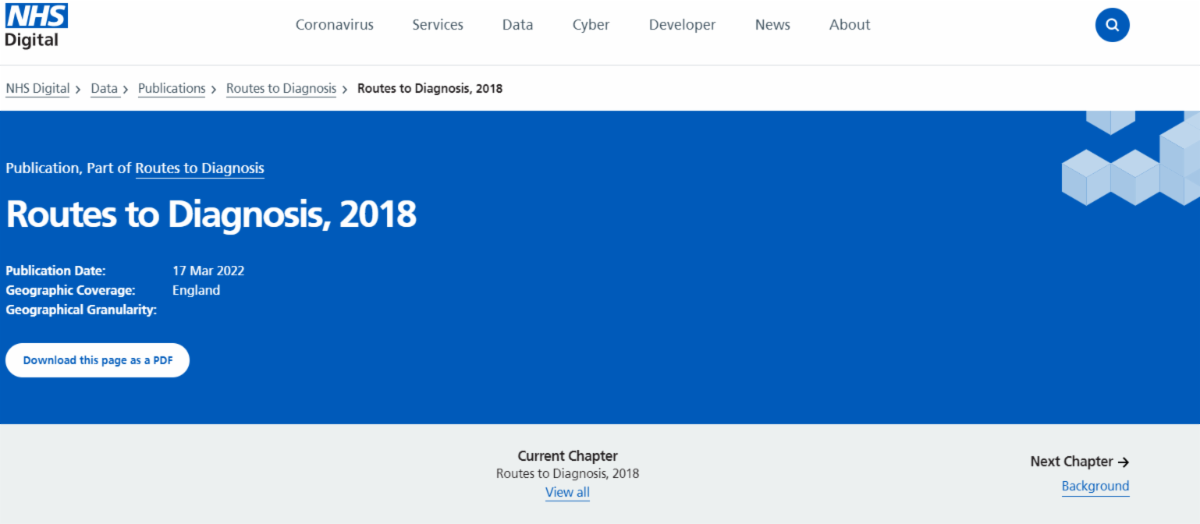
Routes to Diagnosis, a programme of work that categorises the pathways leading to a patient’s diagnosis of cancer, was recently updated to include 2018 data. The release includes information on trends over time for many cancer sites, as well as for age, gender, stage and cancer alliances. The report and accompanying data is available on our website.
The update shows a continuing decrease in the proportion of cancers diagnosed as an emergency presentation, and a rise in the use of the Two Week wait referral pathway. Inequalities highlighted in previous releases continue to be present, particularly with a greater proportion of older people being diagnosed through the emergency presentation Route.
|
|
First page of the Routes to Diagnosis 2018 publication |
|
Thank you for reading. If you have any questions or queries please get in touch. We would welcome your feedback on this newsletter too, and if you wish to unsubscribe please follow the link below. |
|
|
|
|
|
|
|