Welcome to the monthly NDRS newsletter
|
|
Each month we share the latest news from the
National Disease Registration Service (NDRS)
including new data releases, publications and events.
In this month's update, we share the latest treatments data release, Be Clear on Cancer oesophago-gastric evaluation report, and the NCRAS guide to cancer data and working with us.
Please share this newsletter with friends and colleagues
|
|
Update on the NDRS response to COVID-19
|
|
NDRS continues to support the national response to COVID-19 with staff working to provide analytical, technical and data collection expertise.
We are using routine data to support areas such as identifying those at risk, and will be exploring the impact on the patient pathways, treatment and outcomes across cancer, rare diseases and congenital anomalies. At the current time we continue to maintain much of our usual service, collecting and quality assuring data, and producing key outputs and data releases (you can read more about these in the rest of the newsletter).
We have begun to receive a number of enquiries about how the pandemic is impacting on cancer, rare diseases and congenital anomalies, service provision and patient outcomes. These questions are being asked in many areas and we are working across the system to share information and understand what we can answer with the data we have access to, and which activities we need to prioritise. We will bring you more information on this in the next edition of the newsletter.
If you have any questions relating to NDRS work on COVID-19 please contact
[email protected]
|
|
Data releases and publications
|
|
Treatments: CancerData update
|
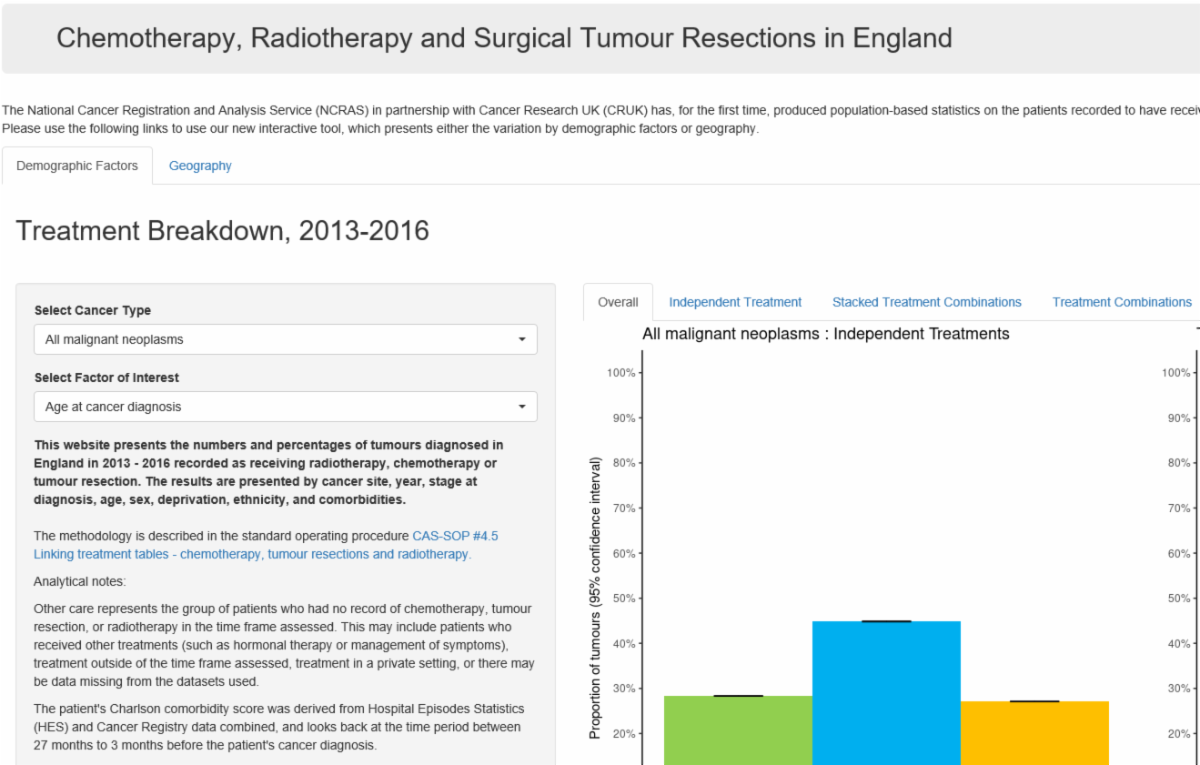
This month, we released the latest data on the numbers of cancers treated with chemotherapy, radiotherapy, and surgery.
The data looks at diagnoses between 2013 and 2016 for 22 cancer sites split by age at diagnosis, stage at diagnosis, broad ethnic group, Charlson morbidity index, income deprivation, sex, year of diagnosis and Cancer Alliance.
|
|
|
A guide to cancer data and working with us
|
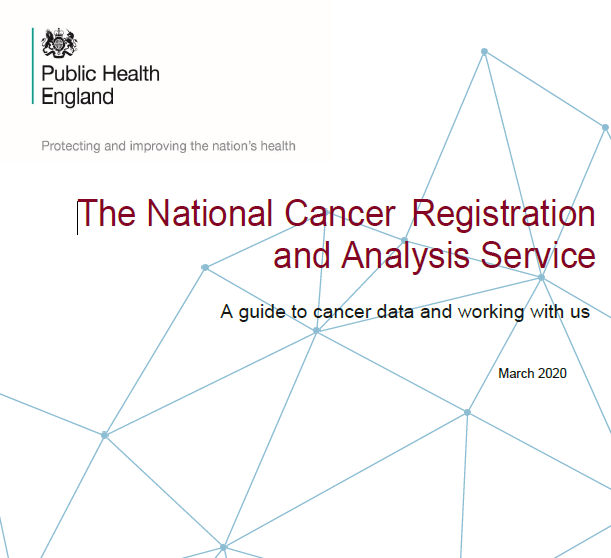
We have produced a signposting
document that provides stakeholders with details of the cancer data collated and quality assured by us here at NCRAS, the outputs we produce, and the different ways others can access the data and work with us.
The document provides an overview of our work and includes links throughout so that readers can find more detailed information if required. This resource will be updated every six months
|
|
|
National statistics on geographical patterns of cancer survival in England
|
Last month, we
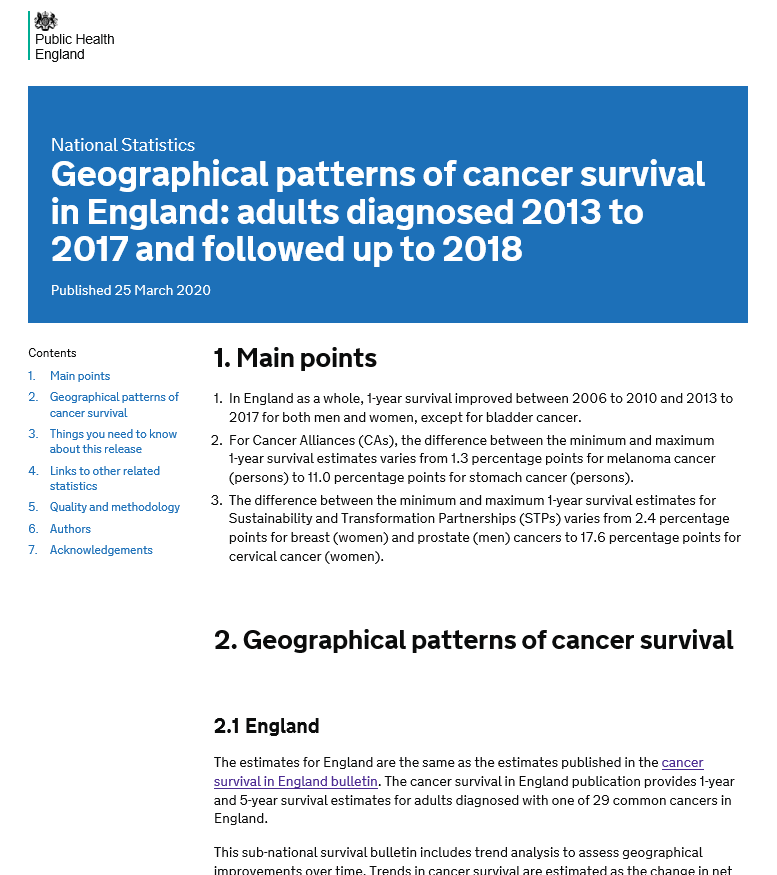
published national statistics on 'Geographical patterns of cancer survival in England: adults diagnosed 2013-2017 and followed up to 2018'.
The publication includes a breakdown of cancer survival by NHS Region, Cancer Alliances, and Sustainability and Transformation Partnerships. It includes 1 and 5 year cancer survival estimates using the same data and methodology as the
cancer survival in England bulletin published in August 2019.
The statistics are accompanied by interactive
visualisations which can be found on CancerData.
|
|
|
New detailed statistics for stomach, oesophageal, kidney and bladder cancers, and sarcomas
|
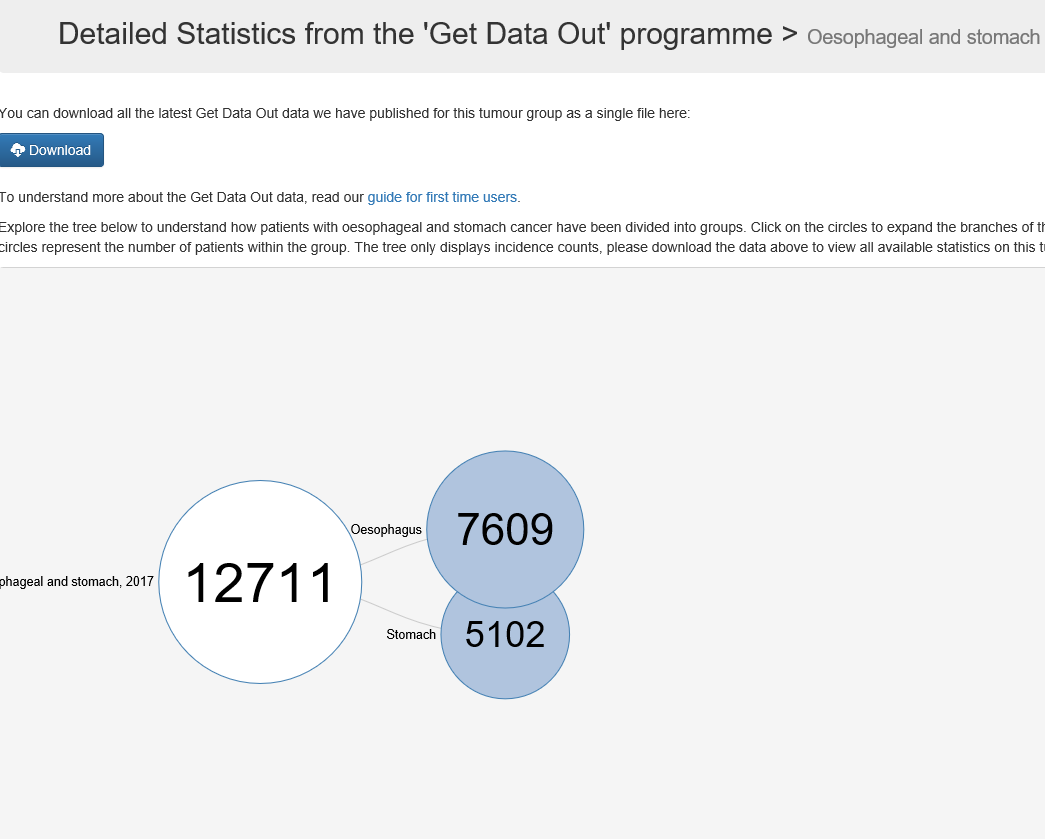
The statistics are accessible for everyone and look at incidence, routes to diagnosis, and treatment for these tumour groups.
|
|
|
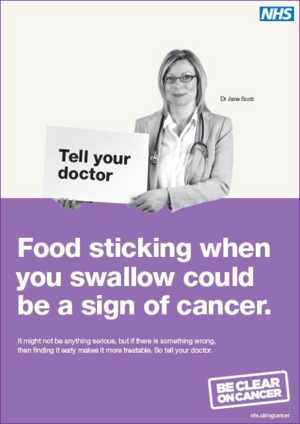
Be Clear on Cancer 2014 and 2015 oesophago-gastric campaigns evaluation report
|
We
published the final evaluation report for the regional and national oesophageal and gastric awareness campaigns 2014 and 2015.
The campaigns aimed to raise awareness of the symptoms associated with oesophageal and stomach cancers, and to encourage those who noticed symptoms to go to their GP.
Increased awareness led to a greater number of people seeking medical advice and undergoing investigations. We saw an increase in the number of urgent GP referrals for suspected cancer and the number of endoscopies performed, but we did not see an impact on the stage of the disease at diagnosis.
|
|
|
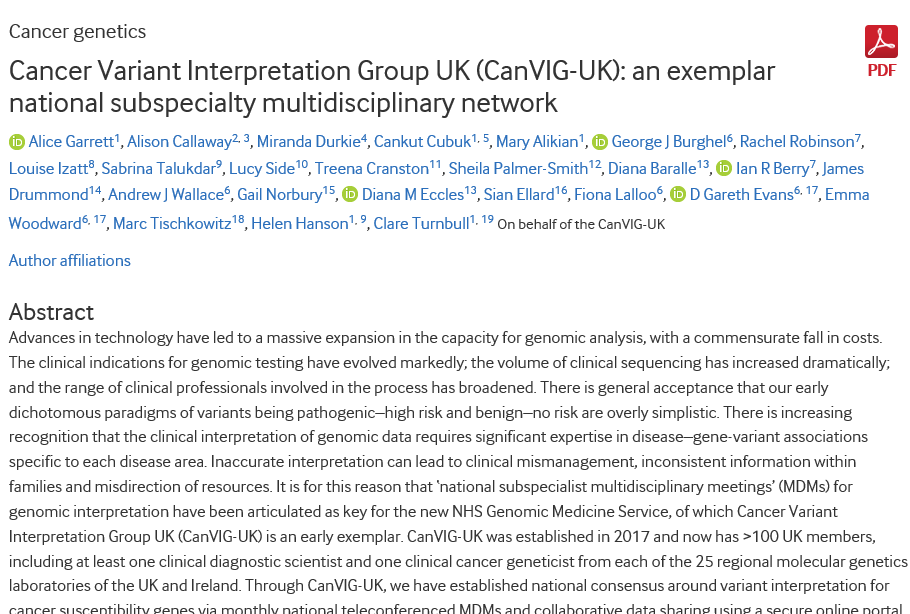
Paper published in the Journal of Medical Genetics
|
The Journal of Medical Genetics
published a paper called 'Cancer Variant Interpretation Group UK (CanVIG-UK): an exemplar national subspecialty multidisciplinary network'.
The paper refers to PHE's collaboration with the genetics labs. We are currently collecting germline cancer susceptibility data from NHS genomics labs and providing variant totals to CanVIG-UK. This is helping to make a real difference to patients and their families.
|
|
|
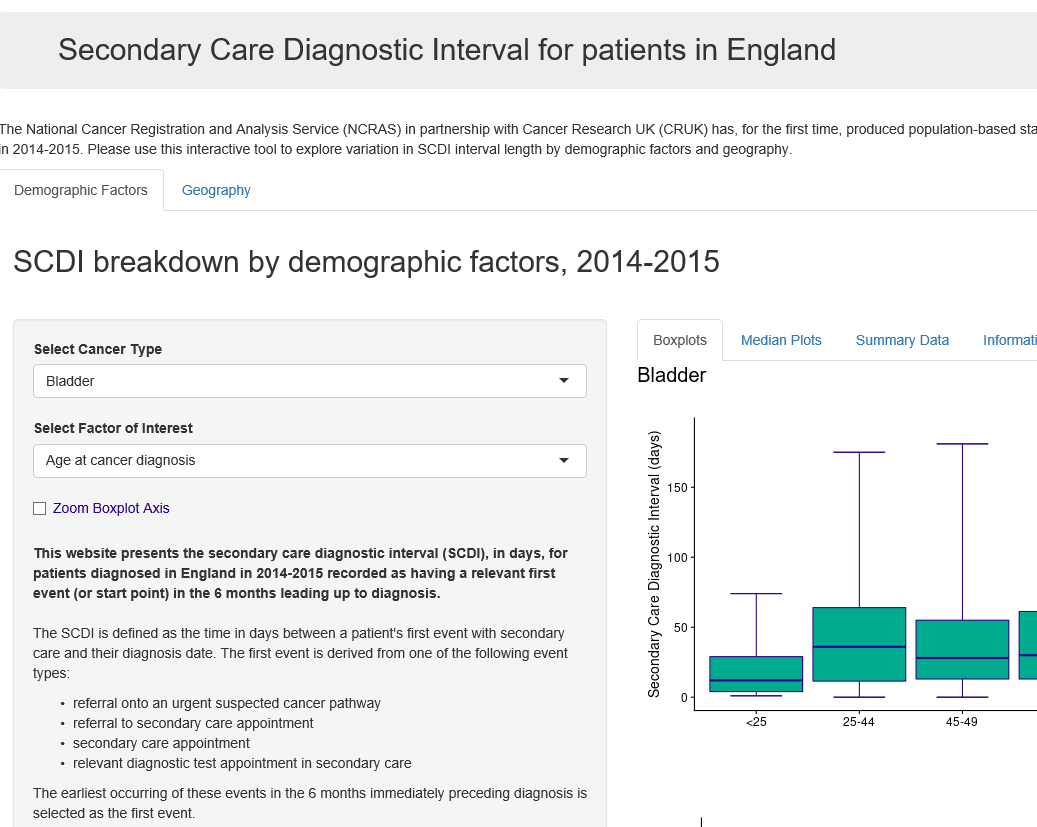
Diagnostic intervals: variation by route - 21st April
|
On the 21st April a new online tool will be published on the CancerData
platform. This work describes secondary care diagnostic intervals and updates the one published last year by cancer site, and includes an additional breakdown by route to diagnosis (emergency presentation, GP referral, and Two Week Wait - urgent referral for suspected cancer) for 24 different cancers diagnosed in 2014 and 2015.
This interactive tool presents these diagnostic intervals and frequencies by age at diagnosis, stage at diagnosis, broad ethnic group, Charlson comorbidity index, income deprivation, sex, and Cancer Alliance, and allows users to download summary data.
|
|
|
2018 cancer registrations and 2018 stage data - end of May
|
At the end of May, the NDRS analytical team will publish two Official Statistics: the full release of the Cancer Registration statistics for 2018 (National Statistic); and the case-mix adjusted percentage of cancers diagnosed at stages 1 and 2 2013 to 2018 (Experimental Official Statistic).
The Cancer Registration statistics will report the cancer diagnoses and age-standardised incidence rates for all types of cancer by age, sex, and region.
The case-mix adjusted percentage of cancers diagnosed at stages 1 and 2 will be available as 1 year and 3 year estimates, by Clinical Commissioning Group for 21 cancer types combined. This will be the first time that this reliable staging data will be published, providing intelligence to help monitor progress towards the 75% ambition.
|
|
|
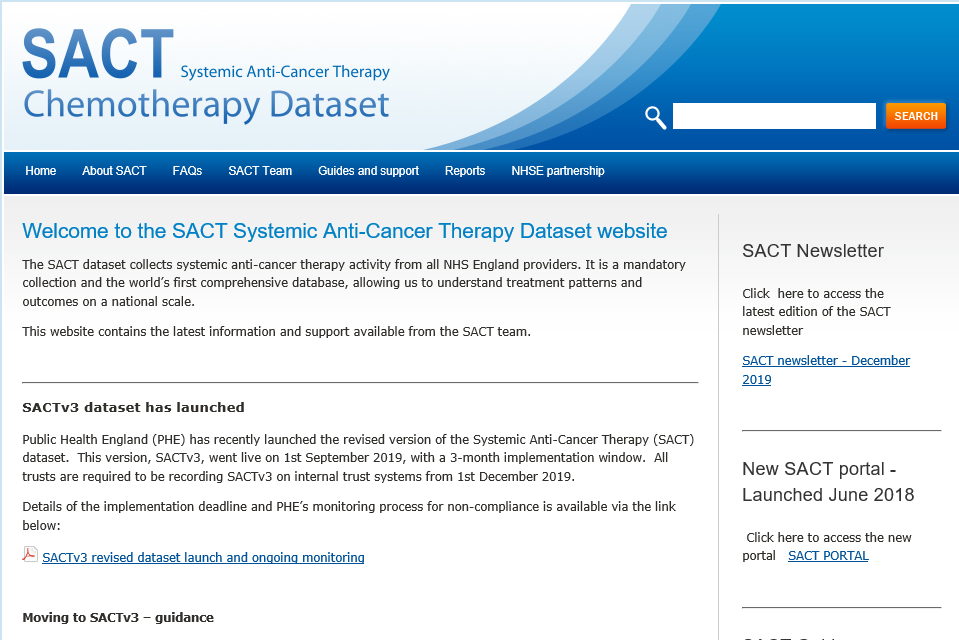
SACT rapid data review and case mix adjusted 30 day post SACT mortality rates
|
|
We will be providing a new data feed to NHS trusts in England to share information on patients who have died within 30 days of receiving a systemic anti-cancer therapy (SACT). This quarterly rapid data review aims to support trusts in their mortality and morbidity (M&M) meetings. It will be available from the end of April 2020.
Alongside this data feed, we are working on case mix adjusted 30 day post SACT mortality rates for certain cancer groups. This information will be released in June 2020 and will be available to view on our
website.
These two new data services are based on our assessment from the feedback we have received from NHS trusts on the back of our previous 30 day post SACT mortality reports. The 2018 and 2016 mortality workbooks are both available to view on our
website.
|
|
Thank you for reading. If you have any questions or queries please get in touch. We would welcome your feedback on this newsletter too, and if you wish to unsubscribe please follow the link below.
|
|
|
|
|
|
|
|